
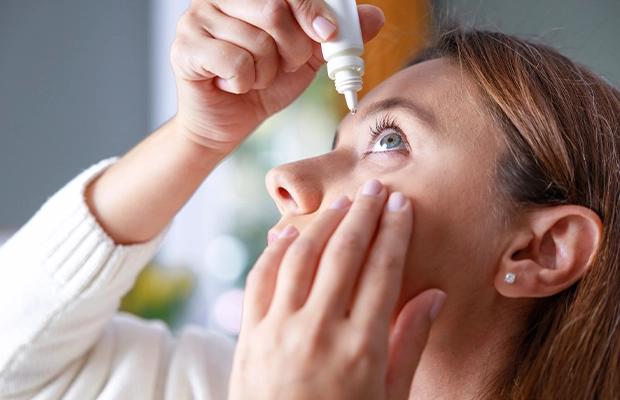
If you’ve seen headlines about eye drops recalled across major pharmacy chains this year, you’re not imagining a one-off story. 2026 has brought a steady stream of separate recalls, from a single California manufacturer’s products pulled under more than two dozen store brand names, to a prescription steroid eye drop, to a well-known over-the-counter cooling drop, all tied to the same underlying concern: a lack of assurance that the product was manufactured under sterile conditions.
This guide walks through every major eye drops recalled event from 2026 that’s been confirmed through FDA enforcement reports and mainstream health reporting, explains what “lack of assurance of sterility” actually means and why it matters for a product you put directly on your eye, how to check whether a bottle in your medicine cabinet is affected, and what to do next if it is. It also covers the broader pattern behind these recalls, since 2026 is not the first year eye drop sterility has made national news. For more explainers on health and consumer safety, visit AI Power Digest.
This article is for general informational purposes only and is not medical advice. If you have used a recalled eye drop product and are experiencing eye pain, redness, discharge, blurred vision, or sensitivity to light, contact a doctor or ophthalmologist promptly rather than relying on this guide for a diagnosis.
Why So Many Eye Drops Recalled Events Happened in 2026
Eye drops occupy an unusual regulatory middle ground. According to reporting from Healthline, over-the-counter eye drops are held to different manufacturing standards than prescription drugs and do not require prior FDA review before hitting store shelves, unlike many other drug categories. That gap has repeatedly surfaced as a theme in coverage of eye drops recalled throughout the year, since several of 2026’s recalls trace back to manufacturing facilities where the FDA could not confirm sterile production conditions, rather than to a confirmed case of actual contamination in every single recalled lot.
Because eye drops bypass the eye’s natural tear-film and blinking defenses when applied directly to the eye’s surface, even a small risk of bacterial or fungal contamination carries outsized consequences compared to a similarly manufactured oral medication. That’s the core reason regulators treat “lack of assurance of sterility” as a serious enough finding to trigger a recall, even when, as was the case in several 2026 incidents, no confirmed injuries had yet been reported at the time the recall was announced.
The Major Eye Drops Recalled Events of 2026, in Order
March–April 2026: The K.C. Pharmaceuticals Recall (Over 3.1 Million Bottles)
The largest and most widely reported eye drops recalled event of the year began on March 3, 2026, when K.C. Pharmaceuticals, Inc. of Pomona, California, initiated a voluntary recall of more than 3.1 million bottles. The FDA classified the recall as Class II on March 31, 2026, according to CNN’s coverage, meaning the agency determined use of the product could cause temporary or medically reversible health effects, with serious harm considered unlikely but not impossible.
What made this recall unusually confusing for consumers is that the same manufacturer’s products were sold under roughly two dozen different store-brand names across major retailers including CVS, Walgreens, Kroger, Rite Aid, H-E-B, Publix, Meijer, Harris Teeter, and Dollar General, according to reporting aggregated by Ophthalmology Times and other outlets. Eight distinct product formulations were affected:
- Sterile Eye Drops AC (tetrahydrozoline HCl 0.05%, zinc sulfate 0.25%)
- Eye Drops Advanced Relief
- Dry Eye Relief Eye Drops
- Ultra Lubricating Eye Drops
- Sterile Eye Drops Original Formula
- Sterile Eye Drops Redness Lubricant
- Sterile Eye Drops Soothing Tears
- Artificial Tears Sterile Lubricant Eye Drops
All were packaged in 0.5 fluid ounce (15 mL) bottles with expiration dates generally falling between April and July 2026. A UC Davis Health clinical breakdown noted the recall affected dozens of individual UPC and NDC codes, since the same formula was relabeled for each retail partner. Given how granular this gets, if you have any store-brand lubricating or redness-relief eye drops purchased since early 2025, the most reliable way to confirm whether your specific bottle is affected is to check your product’s exact UPC or NDC code and lot number directly against the FDA’s own enforcement database, linked later in this guide, rather than relying on brand name alone.
July 2026: Lupin Pharmaceuticals Prescription Steroid Recall (2.5 Million Bottles)
Not every 2026 eye drops recalled event involved an over-the-counter product. On July 7, 2026, Lupin Pharmaceuticals Inc. initiated a voluntary recall of approximately 2.5 million bottles of prednisoLONE Acetate Ophthalmic Suspension, USP 1%, a prescription corticosteroid eye drop commonly prescribed after eye surgery or for certain inflammatory eye conditions. The recall, tracked by the independent monitoring site eyedropsafety.org, covered multiple lot numbers across 5mL, 10mL, and 15mL bottle sizes.
Because this is a prescription product used specifically to manage post-surgical or inflammatory eye conditions, anyone currently using prednisolone acetate ophthalmic suspension should check with the pharmacy that filled the prescription rather than simply discontinuing use on their own, since stopping a prescribed steroid eye drop abruptly can carry its own risks depending on the underlying condition being treated.
July 2026: Rohto Cooling Eye Drops (Millions of Units)
On July 14, 2026, manufacturer Rohto-Mentholatum (Vietnam) Co., Ltd. initiated a recall covering eight distinct Rohto Cooling Eye Drop formulations, announced publicly on July 29, 2026. According to News4Jax’s reporting, expiration dates on the affected lots ranged from July 2026 through February 2029, meaning a meaningful share of the recalled product was likely still sitting on store shelves or in consumers’ homes at the time of the announcement, given how far out some of those expiration dates extend.
July–August 2026: Clear Eyes Maximum Itchy Eye Relief
A more contained but still notable eye drops recalled event involved Clear Eyes Maximum Itchy Eye Relief, distributed by Medtech Products Inc. of Prestige Consumer Healthcare. The product was recalled on July 29, 2026, and the FDA updated its classification to Class II on August 14, 2026, according to NBC News. The affected lot, 2552A, covered approximately 39,060 bottles (NDC 67172-999-01) with an expiration date of September 30, 2027, and an FDA recall number of D-0766-2026. As with the other 2026 recalls, no confirmed adverse events had been reported at the time of the announcement, and the stated reason was again “lack of assurance of sterility” rather than confirmed contamination.
August–September 2026: AvKare, Walgreens, and Additional Store-Brand Recalls
The pattern continued into late summer. On August 20, 2026, AvKare recalled its Carboxymethylcellulose Sodium Ophthalmic Solution 0.5% lubricant eye drops, and Walgreens’ own branded Lubricant Eye Drops using the same carboxymethylcellulose sodium formulation were recalled the same day, both again citing lack of assurance of sterility, according to tracking by MedShadow Foundation. A further sterility-related recall followed in mid-September 2026, and by late September, an additional 25,000 units of Focus PI eye drops (NDC 82724-007-19) had also been recalled.
Taken together across every eye drops recalled incident tracked this year, independent tracking from eyedropsafety.org counted over 300 individual eye drop products that had been subject to FDA notices or recalls across this extended period, spanning dozens of distributors and manufacturing facilities, several of which had also received separate FDA Warning Letters following facility inspections.
What “Lack of Assurance of Sterility” Actually Means
A phrase you’ll see attached to nearly every eye drops recalled announcement from 2026 is “lack of assurance of sterility.” It’s worth understanding precisely what this does and doesn’t mean.
It is not the same as confirmed contamination, a distinction that applies across every eye drops recalled incident covered here. In most of 2026’s recalls, the FDA’s finding was that a manufacturing facility’s processes, documentation, or inspection results couldn’t confirm the product was reliably sterile, not that testing had confirmed bacteria or fungus in every bottle. Several of the recalls explicitly noted no confirmed adverse events at the time of announcement.
It still carries real risk, which is why the volume of eye drops recalled this year matters even without confirmed injuries. Eye drops are considered sterile products precisely because the eye has a thin, vulnerable surface with limited natural defense against introduced pathogens. If a manufacturing process can’t be verified as sterile, even a low probability of contamination across millions of bottles represents a meaningful public health exposure, which is why regulators act on the uncertainty itself rather than waiting for confirmed cases.
Class II is the most common classification among the eye drops recalled in 2026. The FDA defines a Class II recall as one where use of the product may cause temporary or medically reversible health consequences, with the probability of serious harm considered remote but not zero. This is different from a Class I recall, reserved for situations with a reasonable probability of serious health consequences or death, which was the classification used in the more severe, confirmed-infection cases from 2023 discussed below.
A Brief History: Why 2026 Isn’t the First Time This Has Happened
Coverage of eye drops recalled in 2026 has repeatedly referenced a more severe precedent from 2023, and understanding that history helps explain why regulators and consumers alike treat sterility findings so seriously even absent confirmed harm.
Between 2022 and 2023, a documented outbreak linked to EzriCare Artificial Tears and a related product involved an extremely drug-resistant strain of Pseudomonas aeruginosa bacteria. According to the Wikipedia-documented timeline of public health reporting, the CDC traced infections across multiple states resulting in permanent vision loss in some patients and at least one confirmed death, with samples suggesting contamination dating back to as early as May 2022. That outbreak led to a cascade of related recalls throughout 2023, including a separate action against Kilitch Healthcare India after FDA investigators found unsanitary conditions at the manufacturing facility, ultimately expanding to roughly 26 affected products pulled from shelves at CVS, Rite Aid, Target, and Amazon.
That 2023 outbreak is the reason “lack of assurance of sterility” findings now trigger swift recalls even without confirmed injuries. Regulators learned from a case where delayed action around early sterility concerns coincided with a documented, serious outbreak, and the current, more proactive approach to eye drops recalled throughout 2026 reflects that lesson directly, even though none of this year’s individual incidents has been linked to anything approaching the severity of the 2022–2023 outbreak.
How to Check If Your Eye Drops Were Recalled
Given how many separate eye drops recalled events have occurred across 2026, and how many store-brand names a single manufacturer’s recall can span, a methodical check is more reliable than relying on memory of a brand name alone.
The process below applies to any of the eye drops recalled this year.
Step 1: Locate the lot number and NDC or UPC code on your bottle. These are typically printed on the bottom of the box or etched into the bottle itself, usually near the expiration date.
Step 2: Check the FDA’s own enforcement database directly. The FDA maintains an ongoing, searchable recalls, market withdrawals, and safety alerts database that is updated as new actions are announced and is the single most authoritative source for current, exact lot-level recall status, more reliable than any secondhand summary, including this one, since recall lists are added to throughout the year.
Step 3: Cross-check with the manufacturer or retailer directly. If you purchased a store-brand product, the retailer (CVS, Walgreens, Kroger, and others) typically posts recall notices on their own pharmacy or customer-service pages and can confirm whether a specific lot is affected.
Step 4: If your product is affected, stop use immediately. Every 2026 recall covered in this guide carried the same core consumer guidance: discontinue use right away, regardless of whether you’ve noticed any symptoms.
Step 5: Watch for symptoms and seek care if they appear. Redness, pain, unusual discharge, blurred vision, or light sensitivity following use of a recalled product warrants a call to a doctor or ophthalmologist rather than a wait-and-see approach, particularly given the serious outcomes documented in the 2022–2023 outbreak referenced above.
Step 6: Return or dispose of the product appropriately, closing out the checklist for any of the eye drops recalled this year. Most recalls direct consumers to return the product to the place of purchase for a refund or to dispose of it according to the retailer’s or manufacturer’s instructions, rather than simply throwing it in household trash where young children or pets could access it.
Who Should Be Paying Closest Attention to Eye Drops Recalled News
Given how many eye drops recalled events trace back to store brands specifically, anyone using store-brand lubricating or redness-relief eye drops purchased in the past 18 months, given how many separate store brands have been swept into recalls this year, should specifically check their product against the current FDA list rather than assuming a well-known retailer name offers protection.
Among the eye drops recalled this year, one case stands out for prescription users: patients on prescription eye drops, particularly prednisolone acetate ophthalmic suspension following the Lupin recall, should contact their prescribing physician or pharmacy directly rather than making an independent decision to stop a prescribed medication.
Another group worth flagging among eye drops recalled situations: parents of young children should check any eye drop products used for children’s allergy or irritation relief with particular care, since contaminated products pose an elevated risk to younger patients.
And finally, within the broader set of eye drops recalled in 2026, anyone who has recently had eye surgery and is using a post-operative eye drop regimen should confirm their specific product and lot number with their surgeon’s office, given how central steroid and lubricating eye drops are to standard post-surgical care.
How 2026 Compares to Previous Years of Eye Drops Recalled Activity
Context helps when trying to judge whether this year’s volume of eye drops recalled announcements represents a genuine escalation or simply more visible regulatory activity. Independent tracking from eyedropsafety.org counted over 300 individual eye drop products subject to FDA notices or recalls across recent years combined, spanning 36 distributors and 23 manufacturing facilities that have received FDA Warning Letters. Several of those facilities, including one linked to Bausch & Lomb following a March 2026 inspection that resulted in an “Official Action Indicated” classification, received warnings well before any consumer-facing recall was announced, suggesting regulators are increasingly acting on inspection findings rather than waiting for confirmed harm.
This pattern of proactive enforcement is a meaningful shift. Before the 2022–2023 outbreak, sterility concerns at a manufacturing facility didn’t always translate quickly into a public recall. The current wave of eye drops recalled throughout 2026 suggests the FDA has lowered its threshold for public action specifically in this product category, treating any confirmed gap in sterility assurance as reason enough to pull a product rather than waiting for laboratory-confirmed contamination or reported patient harm.
Retailer and Manufacturer Response to Eye Drops Recalled in 2026
Beyond the recalls themselves, the manufacturers and retailers involved in 2026’s eye drops recalled events have taken varying follow-up actions worth understanding. K.C. Pharmaceuticals, the manufacturer behind the single largest eye drops recalled incident of the year, had already been the subject of a prior FDA sterility finding dating back to 2023, according to the clinical pharmacology analysis covered by CNN, meaning the March 2026 recall marked the second time the agency flagged the same Pomona, California facility for similar issues. That repeat finding has drawn particular scrutiny from public health researchers studying manufacturing oversight gaps in the broader generic drug supply chain.
Retailers named in the various recalls, including CVS, Walgreens, Kroger, and others, generally responded by removing affected lots from shelves and updating their own recall-notice pages, while continuing to sell unaffected lots and other eye care products normally. None of the retailers themselves were found responsible for the underlying manufacturing issues, since in each case the problem was traced back to the contracted manufacturer rather than to the retail pharmacy chain distributing the finished, labeled product. This is a structural feature of how most store-brand eye drops reach the market in the first place, a handful of contract manufacturers supplying dozens of retail labels, which is exactly why a single facility’s sterility problem can surface under so many different names on store shelves simultaneously.
Frequently Asked Questions
How many eye drops recalled events happened in 2026?
At least six distinct, separately announced recall actions occurred across 2026 through late September, spanning K.C. Pharmaceuticals (over 3.1 million bottles across 8 formulations), Lupin Pharmaceuticals (approximately 2.5 million bottles of a prescription steroid), Rohto Cooling Eye Drops, Clear Eyes Maximum Itchy Eye Relief, AvKare and Walgreens carboxymethylcellulose sodium drops, and a smaller Focus PI recall, according to independent tracking and FDA enforcement reports.
What does “Class II recall” mean for the eye drops recalled this year?
A Class II recall, the classification used in nearly every major 2026 eye drops recalled event, means the FDA has determined the product could cause temporary or medically reversible health effects, with the probability of serious harm considered remote but not impossible. It’s a step below a Class I recall, which is reserved for situations with a reasonable probability of serious injury or death.
Were any of the 2026 recalls linked to confirmed infections or deaths?
Based on the reporting reviewed for this guide, the major 2026 recalls were issued due to “lack of assurance of sterility” at the manufacturing level, with no confirmed adverse events reported at the time most announcements were made. This differs from the more severe 2022–2023 EzriCare Artificial Tears outbreak, which was directly linked to confirmed infections, permanent vision loss, and at least one death.
How can I find out if my specific eye drops were recalled?
Check the lot number and NDC or UPC code printed on your bottle or box against the FDA’s official recalls database, which is updated as new actions are announced. Because a single manufacturer’s recall can span dozens of store-brand names, checking the exact code rather than relying on the brand name alone is the most reliable method.
What should I do if I’ve already used a recalled eye drop?
Stop using the product immediately. If you’re not experiencing any symptoms, continue monitoring for redness, pain, discharge, blurred vision, or light sensitivity, and contact a doctor or ophthalmologist promptly if any of these develop. If you are experiencing symptoms now, seek medical attention rather than waiting.
Are prescription eye drops recalled too, or just over-the-counter products?
Both. While much of 2026’s coverage focused on over-the-counter artificial tears and lubricating drops, the Lupin Pharmaceuticals recall involved a prescription corticosteroid eye drop, prednisoLONE Acetate Ophthalmic Suspension, showing that prescription status alone doesn’t exempt a product from sterility-related recall risk.
Why do eye drops recalled under one manufacturer sweep up so many store brands?
Many retailers don’t manufacture their own store-brand products; they contract a single pharmaceutical manufacturer to produce a formula and then package and label it under the retailer’s own brand name. When that manufacturer’s facility has a sterility issue, every store brand using that same underlying product is affected simultaneously, which is exactly what happened with K.C. Pharmaceuticals’ roughly two dozen affected retail partners.
Is it safe to use eye drops at all given how many recalls have happened?
Eye drops remain a standard and generally safe treatment for millions of people when sourced from unaffected lots and used as directed. The pattern of 2026 recalls reflects increased regulatory scrutiny following the serious 2022–2023 outbreak, not necessarily a rising rate of actual contamination, though it does underscore the value of periodically checking your specific products against the current recall list, particularly for store-brand lubricating drops.
Conclusion: Check the Lot Number, Not Just the Brand
The throughline across every eye drops recalled event of 2026, from K.C. Pharmaceuticals’ sprawling multi-brand recall to the more contained Clear Eyes and Rohto actions, is that manufacturing-level sterility assurance, not confirmed contamination in every case, has been enough to trigger swift FDA action. That’s a direct, learned response to the far more severe 2022–2023 outbreak, where delayed recognition of a sterility problem coincided with confirmed, serious patient harm.
The practical takeaway is straightforward even amid a genuinely confusing year of overlapping recalls: don’t rely on brand name recognition alone, since a single manufacturing problem can ripple across dozens of retail labels. Check your specific product’s lot number and NDC or UPC code against the FDA’s current database, discontinue use immediately if you find a match, and don’t hesitate to contact a doctor if you develop any eye symptoms after using a product later found to be recalled. For more clear, practical explainers on health and consumer safety, visit AI Power Digest.
Disclaimer: This article is for general informational purposes only and does not constitute medical advice. Recall information changes frequently; always verify current status directly through the FDA’s official recalls database or your pharmacy before discarding or continuing to use any eye drop product. If you are experiencing eye pain, vision changes, or other concerning symptoms, contact a doctor or ophthalmologist promptly rather than relying on this article for diagnosis or treatment guidance.