
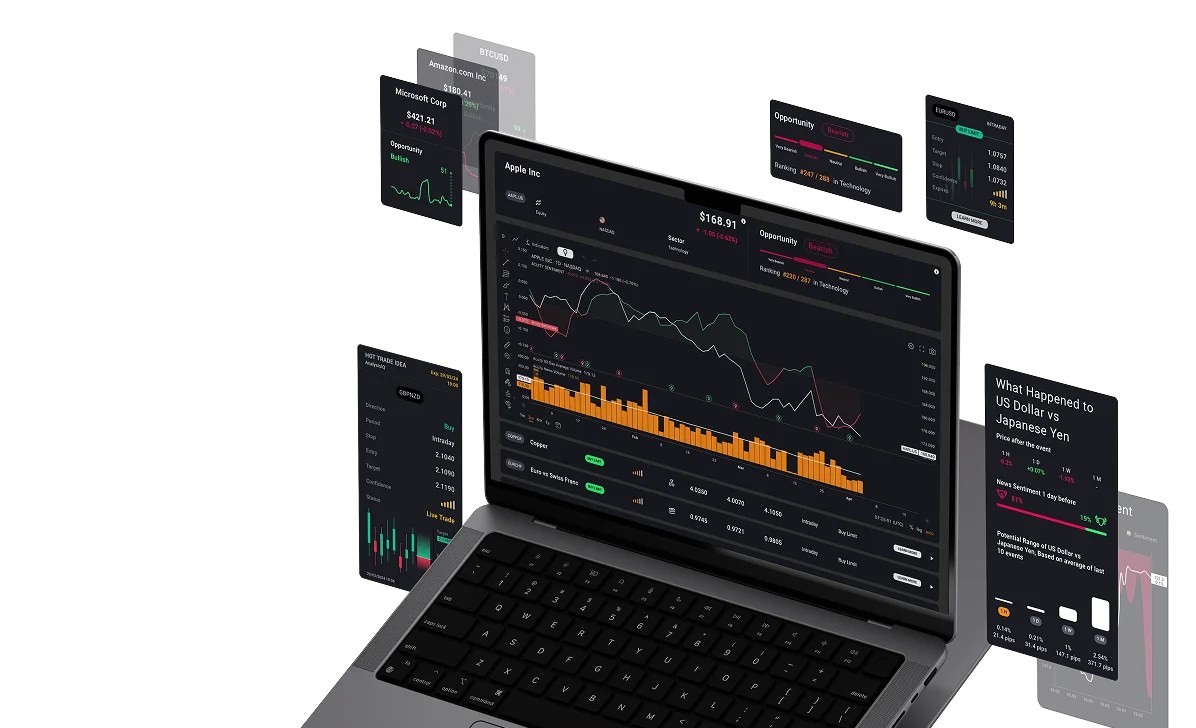
AI for crypto trading and sentiment analysis tools has become one of the most heavily marketed categories in digital assets, and also one of the most misunderstood. Some products are genuine data platforms that help people read market mood faster. Others are little more than dressed-up promises of easy profit. This guide explains how these tools work, what they can and cannot do, and how you can evaluate any product yourself before trusting it with your time, data, or money. At AI Power Digest, we aim to keep things factual, so you will not find price predictions or hype here.
Important: this article is educational and is not financial advice. Nothing here is a recommendation to buy, sell, or hold any asset, or to use any particular product. Crypto markets are volatile, and you can lose some or all of the money you put in.
What Is AI for Crypto Trading and Sentiment Analysis Tools?
The phrase covers two related but separate families of software. Understanding the difference is the first step toward judging marketing claims, because many products blur the two on purpose.
Trading Tools vs. Sentiment Tools
One group of products focuses on trading. These are programs that analyze market data, generate signals, and in some cases place orders automatically through an exchange connection. The other group focuses on sentiment, which means measuring how people feel about an asset or the market as a whole, usually by processing large volumes of text from social media, news, forums, and other public sources.
In practice, AI for crypto trading and sentiment analysis tools often overlap. A platform might calculate a sentiment score from social media and then feed that score into a trading model as one input among many. Still, the two jobs are different. A sentiment dashboard simply describes mood. A trading system makes decisions, which carries far more risk.
Where Artificial Intelligence Actually Fits
“AI” is a broad label. In this field it usually refers to a few concrete techniques:
- Machine learning models that find statistical patterns in historical price, volume, and other data.
- Natural language processing (NLP) that reads text and classifies it as positive, negative, or neutral.
- Large language models that can summarize news, answer questions about market data, or help users write analysis scripts.
- Anomaly detection that flags unusual activity, such as sudden spikes in volume or social chatter.
None of these is magic. Each one learns from past data, and each one can be wrong. When you evaluate AI for crypto trading and sentiment analysis tools, a useful question is always: what exactly is the AI doing, and what data is it using?
How Sentiment Analysis Works in Crypto Markets
Sentiment analysis is popular in crypto because the market is heavily influenced by narratives, online communities, and fast-moving social media conversation. That makes it a natural target for text-processing software.
Common Data Sources
Typical inputs include posts on social platforms, discussion forums, news headlines, video and podcast transcripts, search interest trends, and on-chain data such as wallet activity. Some tools also track developer activity on code repositories, since a project’s engineering pace can signal health. Each source has strengths and weaknesses. Social media is fast but noisy, news is slower but more reliable, and on-chain data is objective but can be hard to interpret.
A strong AI for crypto trading and sentiment analysis tools product will tell you which sources it uses and how often it updates them. If a vendor refuses to explain its data, treat that as a warning sign.
How Text Gets Turned Into a Score
The earliest approaches used simple word lists, counting positive and negative words to produce a number. Modern systems use machine learning classifiers and transformer-based language models trained on large text collections. These can handle context better, but crypto language is difficult. Slang, memes, sarcasm, emojis, and coded phrases confuse even advanced models. A post that says a coin is “going to the moon” may be sincere excitement or a mocking joke.
Because of this, any sentiment score should be viewed as an estimate rather than a fact. Quality providers of AI for crypto trading and sentiment analysis tools publish their methodology and describe known limits.
Sentiment Indices You Can Look At
Some public indicators combine several inputs into one reading of market mood. A well-known example is the Crypto Fear and Greed Index published by Alternative.me, which summarizes market emotion using several factors described in its own methodology. Reading how an index is built is more valuable than looking at the headline number, since the components and weighting determine what it actually measures. Remember that an index describes the past and present, not the future.
How AI Trading Tools Work
Trading products range from simple rule-based bots to complex machine learning systems. The marketing often makes them sound similar, but the underlying logic can be very different.
Signal Generation and Predictive Models
Many tools try to predict short-term price direction or volatility using historical data. They might use technical indicators, order book information, funding rates, or social signals. The model is trained on past patterns and then produces a score or a recommendation. The key limitation of AI for crypto trading and sentiment analysis tools built on history is that markets change. A pattern that worked during one period may stop working when conditions shift, a problem known as regime change.
Execution Bots and Automation
Execution bots connect to an exchange through an API and place orders based on predefined rules or model outputs. Common styles include grid trading, dollar-cost averaging schedules, and trend-following systems. Some are marketed as artificial intelligence even when they are just rule-based programs. A rule-based bot is not necessarily bad, but you should know what you are really getting.
Automation also magnifies mistakes. A faulty setting can place many bad orders quickly, which is why risk controls, such as maximum order size and daily loss limits, matter so much.
Large Language Model Assistants and Agents
A newer trend is the use of large language model assistants that summarize market news, explain charts, or write code for analysis. These can be useful research aids. They can also produce confident-sounding errors, sometimes called hallucinations. Never treat an assistant’s output as verified fact, and be especially cautious if an agent is given the ability to move funds.
Potential Benefits of AI for Crypto Trading and Sentiment Analysis Tools
It is fair to acknowledge the real advantages of AI for crypto trading and sentiment analysis tools, as long as they are described honestly.
Speed and Scale
Software can scan thousands of posts, headlines, and data points far faster than a person can. For researchers, this means quicker awareness of emerging narratives. For active traders, it can mean faster alerts. Using AI for crypto trading and sentiment analysis tools as a filter, rather than as a decision-maker, is one of the more realistic ways to benefit.
Consistency and Discipline
Humans are emotional, and fear and greed can lead to impulsive choices. A rules-based system follows its logic without panic. That does not make it profitable, but it can reduce certain behavioral errors. The catch is that a bad rule applied consistently is still a bad rule.
Round-the-Clock Monitoring
Crypto markets operate continuously, with no closing bell. Automated monitoring and alerts can watch conditions while you sleep, which is helpful for anyone who cannot stay at a screen all day.
Real-World Use Cases for AI for crypto trading and sentiment analysis tools
Looking at how people realistically use these products helps separate practical value from marketing fantasy. Most sensible uses involve research and monitoring rather than blind automation.
Research, Alerts, and Narrative Tracking
Many researchers use AI for crypto trading and sentiment analysis tools to keep track of which topics are gaining attention, which projects are being discussed, and whether the tone of a conversation is shifting. A sudden rise in mentions can prompt a closer look at the primary sources, such as official announcements, code repositories, or on-chain data. The tool points you toward a question; it does not answer it.
Portfolio Awareness and Risk Monitoring
Some people use AI for crypto trading and sentiment analysis tools as a dashboard that flags unusual volatility, large wallet movements, or sharp changes in mood around assets they already follow. This kind of monitoring can improve awareness without requiring the software to make any decisions. It also fits the safer pattern of keeping a human in control.
Practice, Education, and Backtesting Exercises
Students and hobbyists often experiment with AI for crypto trading and sentiment analysis tools in simulated environments to learn how signals behave over time. Practicing on historical data or paper trading accounts can teach concepts like drawdowns, transaction costs, and false signals without exposing real funds. Treat these experiments as classroom exercises rather than a path to guaranteed income.
Common Mistakes People Make With AI for crypto trading and sentiment analysis tools
Even careful readers can slip into predictable traps. Knowing them in advance makes them easier to avoid.
Treating a Sentiment Score as a Trading Signal
A mood reading is a description, not an instruction. High optimism can persist for a long time, and so can high fear. Anyone who uses AI for crypto trading and sentiment analysis tools as an automatic buy or sell trigger risks confusing correlation with cause. A score is best used as context alongside price action, fundamentals, and your own risk limits.
Chasing Recent Performance
Marketing pages love to showcase the best recent results. A strong month says very little about how a system will behave in a different market environment. If you evaluate AI for crypto trading and sentiment analysis tools only by its latest winning streak, you may end up paying for luck rather than skill.
Ignoring Costs, Taxes, and Slippage
Frequent automated trades can generate fees, spreads, and taxable events that quietly reduce results. Before judging any strategy, estimate the full cost of running it, including subscription charges and exchange fees. Many apparently profitable strategies turn unprofitable once real-world costs are included.
Over-Trusting Automation
The convenience of AI for crypto trading and sentiment analysis tools can create a false sense of safety. People stop checking, markets change, and a bot keeps executing a strategy that no longer fits conditions. Regular review is part of using any automated system responsibly.
Limitations and Risks You Should Understand
The downsides of AI for crypto trading and sentiment analysis tools deserve at least as much attention as the upsides, because they are where people lose money.
Noise, Bots, and Manipulation
Social media in crypto contains a large amount of promotional content, coordinated campaigns, and automated accounts. A sentiment tool that treats all posts equally can be misled by manufactured hype. Pump-and-dump schemes often rely on exactly this, creating the appearance of enthusiasm to attract buyers. If a tool does not attempt to filter spam and bot activity, its readings may reflect marketing rather than genuine opinion.
Overfitting and Misleading Backtests
Overfitting happens when a model is tuned so tightly to past data that it appears brilliant historically but fails on new data. Backtest results are easy to flatter through careless methods, such as using information that would not have been available at the time or ignoring trading costs. When a vendor shows an impressive backtest, ask how it was built, which period it covers, and whether fees and slippage are included.
Latency, Slippage, and Liquidity
Even a good signal can fail in practice. Orders take time to execute, prices move, and thinly traded assets can have large gaps between the price you expect and the price you get. These real-world frictions can erase an apparent edge.
Security and Custody Risks
Connecting third-party AI for crypto trading and sentiment analysis tools to your exchange account creates a security exposure. If the tool is compromised or malicious, your account could be at risk. Giving a tool the ability to withdraw funds is especially dangerous. We cover practical protections later in this guide.
Model Errors and Hallucinations
Models can misread sarcasm, mistranslate languages, or generate summaries that sound plausible but are inaccurate. Always cross-check important claims against primary sources.
Scam Red Flags in AI Crypto Trading Offers
The popularity of artificial intelligence has made AI for crypto trading and sentiment analysis tools a favorite costume for fraudsters. Regulators have repeatedly warned consumers about schemes that use the buzz around AI to attract victims. The U.S. Securities and Exchange Commission’s investor education site, Investor.gov, publishes alerts and guidance on spotting investment fraud, and the Commodity Futures Trading Commission offers its own consumer resources at CFTC.gov. Both are worth bookmarking.
Warning Signs
- Guaranteed or unusually high returns. No honest provider can promise profit in a volatile market.
- “Secret” proprietary AI with no explanation. Claims of a mysterious algorithm that cannot be examined are a classic pitch.
- Pressure to deposit quickly. Urgency is a manipulation tactic.
- Celebrity endorsements and deepfakes. Fake videos and impersonated public figures are increasingly common, so verify any endorsement through official channels.
- Requests to send crypto directly to a person or unfamiliar wallet. This is often irreversible.
- No identifiable company or team. If you cannot find real names, a business registration, and a physical presence, be skeptical.
- Withdrawal problems. Platforms that show large balances but block withdrawals, or demand extra fees to release funds, are a hallmark of fraud.
A genuine AI for crypto trading and sentiment analysis tools provider will be transparent about its limits, will not guarantee outcomes, and will make it easy to understand what you are paying for.
A Framework to Evaluate AI for Crypto Trading and Sentiment Analysis Tools
Rather than ask whether one of the many AI for crypto trading and sentiment analysis tools is good, ask a series of concrete questions. This framework is designed to help you decide for yourself, and it is not a recommendation of any specific product.
Transparency and Methodology
Does the vendor explain what data it uses, how the model works at a conceptual level, and what its known weaknesses are? Do they publish documentation, research papers, or a clear methodology page? Opaque tools are harder to trust.
Data Provenance and Quality
Where does the data come from, and how is it cleaned? Does the platform handle spam, duplicates, and bot accounts? For market data, you can cross-check prices and volumes against an aggregator such as CoinGecko to see whether numbers look reasonable.
Evidence and Track Record
Look for independent evidence rather than testimonials. Claims should be specific, time-stamped, and verifiable. Be careful with screenshots, which are easy to fake, and with results that omit losing periods.
Fees and Pricing
Understand exactly how you will be charged. Common models include monthly subscriptions, performance fees, and revenue from exchange commissions. Hidden costs, such as trading fees, spreads, and withdrawal charges, can eat into returns.
Regulatory Status and Company Identity
Check whether the company is registered, where it operates, and whether any regulator has issued warnings. Search the firm’s name together with words like “complaint” or “warning,” and review regulator websites directly.
Security Practices
Look for two-factor authentication, clear data-handling policies, and a record of responsible security disclosures. A platform that asks for more access than it needs is a concern.
Protecting Your Accounts When Using AI for Crypto Trading and Sentiment Analysis Tools
If you decide to connect any automated tool to an exchange, a few practices reduce risk.
API Key Safety
When you create an API key, give it the minimum permissions required. Many tools only need read access to display data. If trading access is needed, avoid enabling withdrawal permission. Restrict the key to specific IP addresses where the exchange allows it, use two-factor authentication on your exchange account, and rotate or delete keys you no longer use. Never share your secret key or your seed phrase with anyone, because no legitimate tool needs your seed phrase.
Paper Trading and Small Tests
Before using real money, many platforms offer simulated or “paper” trading. This lets you observe how a tool behaves without financial risk. Even after you move to live conditions, a cautious approach is to test with an amount you could afford to lose entirely, and to observe the results over a meaningful period rather than a few days.
Monitoring and Kill Switches
Automation should not be a set-it-and-forget-it activity. Check activity regularly, set clear limits on losses, and know how to shut a system down quickly. If a tool makes it hard to stop or withdraw, that is a serious red flag.
Costs and Business Models Behind AI for Crypto Trading and Sentiment Analysis Tools
Understanding how a vendor of AI for crypto trading and sentiment analysis tools makes money helps you spot conflicts of interest.
Subscriptions, Performance Fees, and Referrals
Some companies charge a flat monthly fee, which aligns income with access rather than your trading outcomes. Others take a share of profits, which may sound fair but can encourage risky behavior. Still others earn referral commissions when you open exchange accounts through their links. None of these models is automatically bad, but each creates incentives you should be aware of.
Free Tools and the Data Question
Free versions of AI for crypto trading and sentiment analysis tools can be genuinely useful, but ask how they are funded. If you are not paying, you might be the product, whether through advertising, data collection, or upselling. Read the privacy policy to learn what is collected and how it is used.
Regulation and Compliance Considerations for AI for Crypto Trading and Sentiment Analysis Tools
The rules around digital assets vary by country and change over time, so check current requirements for your location.
Securities, Commodities, and Money Services
In the United States, different agencies may oversee different aspects of crypto activity. Depending on how a product is structured, a service that manages money or gives personalized investment advice may fall under securities, commodities, or money transmission rules. A software tool that merely displays data is different from a service that trades on your behalf. If you are considering building or operating a product in this space, consult a qualified attorney, because this is not something a blog post can settle.
Taxes
In many jurisdictions, crypto trades and income can be taxable events, and automated trading can generate a large number of transactions that need to be tracked. Keep records, consider tax software where appropriate, and talk to a licensed tax professional about your situation.
How to Learn About AI for Crypto Trading and Sentiment Analysis Tools Safely
If your interest is educational, there are low-risk ways to build understanding of AI for crypto trading and sentiment analysis tools without handing over funds.
Start With Observation
Follow sentiment indicators alongside price charts for a while without acting on them. Notice how often mood readings lag behind price moves or fail to predict them. This kind of observation teaches humility about what the tools can and cannot do.
Learn the Basics of Data and Statistics
Concepts such as sample size, correlation versus causation, overfitting, and base rates help you think critically about any model. Many free courses and open educational materials cover these topics. A solid grounding in statistics will protect you better than any single product.
Experiment With Open Data
Public data sources and aggregator APIs allow hobbyists to experiment with simple analyses. You can pull historical prices, calculate basic indicators, and test ideas in a spreadsheet or notebook. Treat this as a learning exercise, not a profit plan.
How to Judge Online Content About AI for Crypto Trading and Sentiment Analysis Tools
Because AI for crypto trading and sentiment analysis tools attract affiliate marketing and sponsored posts, it is wise to read articles critically. Google publishes guidance describing the qualities it looks for in helpful, reliable, people-first content. Its documentation on creating helpful, reliable, people-first content highlights good signals such as demonstrating first-hand experience, citing trustworthy sources, and being clear about who created the content and why.
You can apply the same signals as a reader. Does the author disclose affiliate relationships? Are claims backed by sources? Are dates visible, and does the article mention risks as clearly as benefits? Pages that only praise a product, promise easy income, or hide who is behind them deserve extra skepticism, particularly when money is involved.
Frequently Asked Questions About AI for Crypto Trading and Sentiment Analysis Tools
What are AI for crypto trading and sentiment analysis tools?
They are software products that use machine learning and language processing to analyze crypto market data and public opinion. Some generate trading signals or place orders automatically, while others simply measure market mood from text sources such as news and social media.
Can AI predict crypto prices reliably?
No version of AI for crypto trading and sentiment analysis tools can predict prices reliably. Markets are influenced by many unpredictable factors, and models learn from past data that may not repeat. Treat any prediction as a probability estimate at best, and be wary of anyone claiming certainty.
Is sentiment analysis useful for crypto?
It can provide context about market mood and emerging narratives, but it is noisy and can be manipulated by bots and coordinated campaigns. It works best as one input among many rather than a standalone decision tool.
Are AI crypto trading bots legal?
Using a trading bot is generally permitted in many places, but rules differ by country and by how the product is offered. Services that manage other people’s money or give personalized advice may face additional regulation. Check local laws and your exchange’s terms of service.
How can I tell if an AI crypto trading platform is a scam?
Look for guaranteed returns, secret algorithms, pressure to deposit, requests to send funds to individuals, no verifiable company, and trouble withdrawing. Review regulator resources and search for complaints before engaging.
Are free AI for crypto trading and sentiment analysis tools safe?
Some are, but you should understand how they make money, what data they collect, and what permissions they request. Avoid sharing seed phrases or enabling withdrawal permissions, and read privacy policies carefully.
Do I need coding skills to use AI for Crypto Trading and Sentiment Analysis Tools?
Not necessarily. Many AI for crypto trading and sentiment analysis tools offer dashboards and no-code interfaces. However, understanding basic data concepts helps you evaluate results, and coding skills make it easier to test ideas on your own.
What should I check before connecting AI for Crypto Trading and Sentiment Analysis Tools to my exchange account?
Check the company’s identity and reputation, use the minimum API permissions, disable withdrawals, enable two-factor authentication, and test with paper trading or a very small amount first.
Conclusion: Using AI for Crypto Trading and Sentiment Analysis Tools With Clear Eyes
AI for crypto trading and sentiment analysis tools can speed up research, organize large volumes of information, and support more disciplined routines. They cannot remove risk, predict the future, or turn an uncertain market into a sure thing. The strongest approach is skeptical and methodical: understand what the software actually does, verify claims independently, protect your accounts, and never invest more than you can afford to lose.
If you remember only a few ideas, make them these: demand transparency, treat guaranteed profit as a warning sign, limit permissions, and keep learning. For more plain-English explainers on technology, finance, and digital assets, keep following AI Power Digest for fresh, fact-checked coverage.
Disclaimer: This article is provided for general informational purposes only and does not constitute financial, investment, legal, or tax advice. Cryptocurrency and automated trading involve substantial risk, including the potential loss of your entire investment. Information about products, regulations, and markets can change, so please verify current details with official sources and consult qualified professionals before making any decisions.