
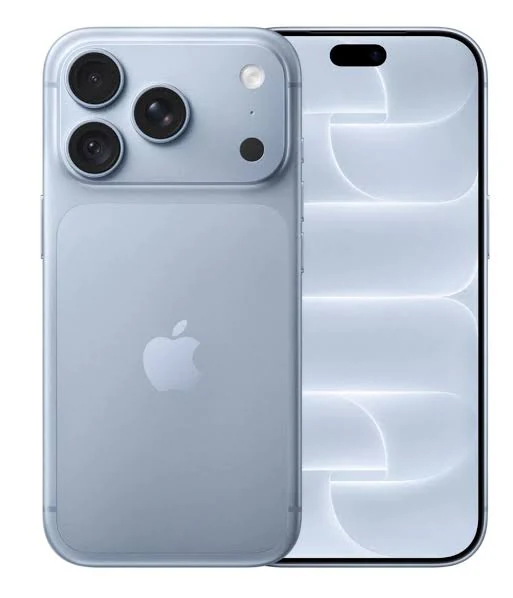
The new iPhone lineup for 2026 is one of the biggest shake-ups in years: Apple introduced the iPhone 18 Pro and iPhone 18 Pro Max on September 9, followed by its first foldable, the iPhone Duo, which went on sale in Apple Stores today, October 23. Prices went up, a standard iPhone 18 did not appear this fall, and a new version of Siri arrived in beta, so the decision of whether to upgrade to a new iPhone is more complicated than usual. In this guide from AI Power Digest, we explain what Apple announced, what each model costs, which features matter, and how to buy and set up a new iPhone without overpaying or falling for a scam.
Quick note: this article is general consumer technology information based on Apple’s announcements and news reports available on October 23, 2026. It is not a purchase recommendation. Prices, trade-in values, and availability change and vary by country and carrier, so confirm details on Apple’s website or with the seller before you buy.
What Is the New iPhone Lineup in 2026?
Apple’s fall 2026 lineup has three phones: the iPhone 18 Pro, the iPhone 18 Pro Max, and the iPhone Duo. According to Apple’s official announcement of the iPhone 18 Pro models, the two Pro phones feature a new 48MP main camera with variable aperture, the A20 Pro chip, a redesigned Dynamic Island, improved battery life, and iOS 27 with a new Siri AI. The foldable iPhone Duo arrived about five weeks later.
What Apple Announced on September 9
At its “Surprise and Shine” event, Apple introduced three new iPhone models alongside other products, including Apple Watch Series 12, Apple Watch Ultra 4, and AirPods 5, according to coverage from Creative Bloq and CNBC. CNBC’s live coverage of the event noted that John Ternus made his debut as Apple’s chief executive at the presentation, and that the Pro models carried a $100 price increase over last year’s.
Here is the lineup at a glance:
| Model | What it is | Key idea |
|---|---|---|
| iPhone 18 Pro | Flagship phone | Variable-aperture camera, A20 Pro, big battery gains |
| iPhone 18 Pro Max | Larger flagship | Largest battery-life jump Apple has made on an iPhone |
| iPhone Duo | First foldable iPhone | 7.6-inch inner display and 5.4-inch outer display |
What Is Missing: No Standard iPhone 18 This Fall
Several outlets noted that Apple did not announce a standard iPhone 18 in September. Creative Bloq described the event as delivering the Duo, the 18 Pro, and the 18 Pro Max but no vanilla iPhone 18. That means shoppers who want a lower-priced new iPhone have to look at older models that Apple continues to sell. Wikipedia’s entry on the iPhone 16 reports that Apple discontinued the iPhone 16 Plus on September 9, 2026, while the standard iPhone 16 remained on sale in a 128GB configuration. Because Apple’s catalog changes, check Apple’s website for what is currently available.
New iPhone Prices and Release Dates
Pricing is where the new iPhone launch got attention. According to Apple’s press release, the iPhone 18 Pro starts at $1,199 in the United States and the iPhone 18 Pro Max at $1,299, with storage options from 256GB to 2TB. CNBC reported that these prices are $100 higher than last year’s iPhone 17 Pro, and that the increase came amid a global component shortage, especially for memory.
| Model | Starting U.S. price | Availability |
|---|---|---|
| iPhone 18 Pro | $1,199 | Pre-orders Sept. 12, available Sept. 18 |
| iPhone 18 Pro Max | $1,299 | Pre-orders Sept. 12, available Sept. 18 |
| iPhone Duo | $1,999 (256GB) | Pre-orders Oct. 16, available Oct. 23 |
Apple also said the Pro models would reach 20 additional countries and regions on September 25, and that pre-orders opened in more than 65 countries and regions on September 12. Prices in other countries differ, so use Apple’s local site for your region.
How a New iPhone Price Compares With Last Year
Last year’s iPhone 17 Pro started at $1,099, which makes the $100 increase easy to calculate. Apple also reportedly raised the price of the iPhone Air to $1,099 on September 9, according to Wikipedia’s entry for that phone. Trade press expected higher memory costs to push prices up before the event, and TrendForce had forecast increases of 10 to 20 percent. The actual Pro increase was smaller than some of those predictions, which is a reminder that forecasts before a launch are only estimates.
Monthly Payments and Leasing
Apple’s press release lists monthly payment options in the United States, including $49.95 per month for the iPhone 18 Pro and $54.12 per month for the Pro Max over 24 months using financing. Apple also offers a leasing program called Apple Upgrade, provided by Klarna, with terms starting as low as $34.99 per month for 24 months. A lease is not a purchase, and the release warns that closing a lease early can mean a substantial charge. Read the terms before you choose any monthly plan, and compare the total cost with paying upfront.
New iPhone 18 Pro and Pro Max Features
Apple’s marketing for the new iPhone uses superlatives freely, so it helps to separate concrete changes from slogans. Here are the main upgrades to the new iPhone described in the official release.
A New iPhone Camera With Variable Aperture
The headline feature is a 48MP main camera with variable aperture, which Apple describes as bringing aperture control to the iPhone for the first time. Six laser-cut blades move to change the aperture, and the camera can widen to ƒ/1.48 in low light or narrow to ƒ/4 for more depth of field. Users can manually select among four aperture settings in the Camera app, and Apple says developers get an API for aperture control in their own apps.
Apple also added Pro controls, which let users adjust aperture, shutter speed, and white balance and use a histogram. Photographic Styles gained texture and grain controls, Cinematic effects can be applied after capture for video up to 60 frames per second, and Time-lapse mode can record in 4K with Dolby Vision HDR. These are Apple’s claims, and independent reviews will show how they hold up in real use.
Apple Reference Image and AI Authenticity
One of the more unusual additions is Apple Reference Image. According to the release, the main camera’s new sensor can sign every pixel it sees, and in a new Reference mode the camera captures signed sensor data that Apple’s Private Cloud Compute develops into an unalterable reference image. People can compare it with the edited photo in the Photos app, like a digital negative, to see whether changes were made.
Apple describes it as opt-in, and it noted that the feature will not be available at launch in China and that capture will not be available at launch in the EU. Apple also said it plans to support the SynthID standard in a software update later this year to help identify images generated or edited with AI. In a time of convincing synthetic images, a built-in way to show what the sensor captured is a notable idea, though how widely it will be adopted by apps and platforms remains to be seen.
A20 Pro, Cooling, and Connectivity
The new iPhone Pro models use the A20 Pro chip, built on a 2-nanometer process. Apple says the 6-core CPU has 50 percent more memory bandwidth than the A19 Pro, the 7-core GPU is up to 40 percent faster than the A19 Pro, and a dual 16-core Neural Engine doubles AI processing power compared with the previous generation. The company also redesigned the cooling system, with a vapor chamber that has three times more surface area than the iPhone 17 Pro’s and up to a 40 percent gain in sustained performance.
On the networking side, Apple’s N1 chip supports Wi-Fi 7, Bluetooth 6, and Thread, and the new C2 modem is described as delivering meaningfully faster uploads than the C1X while using 15 percent less energy. It also adds mmWave support in the United States. Benchmarks and carrier tests will matter more than marketing figures here.
Battery Life and Charging
Apple says eSIM-only models deliver up to 36 hours of video playback on the iPhone 18 Pro and up to 45 hours on the iPhone 18 Pro Max, and that the Pro Max has the largest battery-life increase ever on an iPhone. The iPhone 18 Pro can charge to 50 percent in around 15 minutes with a compatible 60W adapter and cable, or 50 percent in 30 minutes wirelessly. Those numbers come from Apple’s own testing with pre-production units, and real-world results vary with usage, network conditions, and settings, as Apple’s footnotes themselves say.
New iPhone Design, Dynamic Island, and Colors
The Dynamic Island is smaller and now supports up to three Live Activities at once while still handling Face ID. The new iPhone Pro models come in black, silver, glacier, and a new burgundy color. Apple also introduced a Wrist Strap priced at $29 and a Crossbody Strap priced at $59, plus new cases at $49 to $59 in the United States. Both Pro models contain 40 percent recycled content overall, according to Apple, including 100 percent recycled cobalt in the battery and 85 percent recycled aluminum in the enclosure.
The New iPhone Duo: Apple’s First Foldable
The most talked-about new iPhone this season is the one that opens like a small book. Apple described the iPhone Duo as its first foldable and said it has the largest display ever on an iPhone.
Display and Design
According to Apple’s iPhone Duo announcement, the phone has a 7.6-inch inner display and a 5.4-inch outer display, and when closed it is similar in size to a passport. Malaysian outlet The Star reported Apple’s claim that the outer screen offers about 90 percent of the screen area of the iPhone 18 Pro. Reports say Apple uses a nano-texture finish on the foldable display to reduce glare and the visibility of the crease, and that iOS 27 includes features such as Split View for running two apps side by side.
The Duo is powered by the same A20 Pro chip and C2 modem as the Pro phones, with a similar vapor chamber cooling approach, according to reports. It comes in two colors, star white and night sky. TechCrunch, as summarized by other outlets, reported Apple’s battery claims of up to 31 hours of video playback on the inner display and 44 hours on the outer screen. As with all manufacturer figures, treat them as best-case numbers until reviews confirm.
Price and Availability of the iPhone Duo
The iPhone Duo starts at $1,999 for 256GB, with storage options reported to go up to 2TB. Pre-orders opened on October 16, and Apple’s newsroom report on its launch says it made its debut at Apple Store locations worldwide on Friday, October 23, with executives greeting customers at stores in Austin and New York. Apple said customers can shop for it in stores, on apple.com, and in the Apple Store app, with in-store help for trade-ins, leasing, financing, and data transfer through Personal Setup.
The Hill described the Duo’s price as the most expensive sticker price to date for an Apple iPhone. That puts it in a different category from the Pro phones, as one Indian outlet noted when it described the device as a halo product rather than a natural upgrade from an older Pro Max.
Who Might Want the New iPhone Duo?
A foldable new iPhone is not for everyone. It may appeal to people who read, work, or multitask on their phones a lot and want a larger screen without carrying a tablet. It may be less appealing if you prioritize price, simplicity, or durability concerns around folding screens. Because this is Apple’s first foldable, some buyers may prefer to wait for reviews, long-term reliability reports, and software updates before spending close to two thousand dollars. That is a judgment call, not a rule.
iOS 27, Apple Intelligence, and Siri AI on the New iPhone
Software is part of every new iPhone, and this year’s story is Siri AI. Apple’s release describes Siri AI as an entirely new version of Siri powered by Apple Intelligence that can draw on personal context, understand what is on the screen, and answer questions about almost any topic. A Siri mode in the Camera app lets users get information about what is in front of them.
What to Know Before You Rely on It
Apple’s own footnotes include important limits that are easy to miss in the headlines:
- Beta status: Siri AI is rolling out as a beta with iOS 27, available in English to start, with French, Japanese, Korean, Portuguese, and Spanish planned for October.
- Regions: Apple said Siri AI will not initially be available in the EU on iOS, and certain related features will also be unavailable there.
- Usage limits: Features that rely on server-side models are subject to daily usage limits, and Apple said expanded access will be available for a fee in the future.
- Age: Siri AI is not available to users under 13.
- Privacy: Apple says Apple Intelligence uses on-device processing and Private Cloud Compute.
iOS 27 was released on September 14, and Wikipedia’s listings show iOS 27.0.1 arriving on September 28, so keep your new iPhone updated. Whether Siri AI lives up to its promise will be clearer after more people have used it for weeks, not minutes.
Should You Upgrade to a New iPhone? A Framework
No article can tell you whether to buy, because it depends on your phone, your budget, and your priorities. Instead, use these questions as a framework.
Questions to Ask Yourself
- How old is your current phone, and is it still getting updates? Older models eventually lose software support.
- What is your battery health? A degraded battery can often be replaced for less than the price of a new phone.
- Are you hitting storage or performance limits? If not, an upgrade may be less urgent.
- How much do you care about the camera? The variable-aperture camera is the biggest hardware change for photography fans.
- Do you need the AI features? Siri AI is in beta and has limits, so consider whether you would use it daily.
- What would trade-in and carrier deals bring the price down to? Compare the real out-of-pocket cost, not the sticker price.
- Does an eSIM-only phone work for you? See the next section.
A Simple Scenario Guide
| If this describes you | Consider |
|---|---|
| You have a recent Pro model that works well | Waiting costs nothing, and reviews will arrive |
| Your phone is several years old with a weak battery | A new iPhone or even a battery replacement may be worth pricing out |
| You mainly want a bigger screen | Compare the Pro Max and the Duo in a store |
| You are price sensitive | Look at older models Apple still sells, and carrier or trade-in offers |
| You travel often | Check eSIM availability and roaming options first |
This table is a starting point, not advice for your situation.
eSIM-Only: What It Means for Your New iPhone
One detail that can surprise buyers is that, according to Apple’s release, eSIM-only models of the iPhone 18 Pro and Pro Max are available in the United States, Canada, Japan, Mexico, and several other countries and regions. Apple says eSIM is supported by more than 500 carriers worldwide and that the space formerly used for the physical SIM allows a larger battery, adding about two hours of video playback.
Before buying, check that your carrier supports eSIM, that you know how to transfer your line, and that your travel plans work with eSIM-based roaming or local plans. iOS 27 also introduces iPhone Handoff, which Apple says lets users with supported carriers switch between two iPhones with the same number, with T-Mobile in the U.S. and Telekom Germany named at launch.
How to Buy a New iPhone Smartly
Buying a new iPhone costs hundreds or thousands of dollars, so a short checklist helps.
- Decide on storage. The Pro models start at 256GB, and the Duo at 256GB. Photos and videos, especially high-quality video, use space quickly, but you can also manage storage with cloud plans such as iCloud+, which Apple says starts at $0.99 per month in the U.S.
- Compare channels. Apple, carriers, and authorized retailers may differ on promotions, financing, and trade-in values.
- Check your trade-in value. Apple says trade-in credits range from $175 to $885 in the U.S. for iPhone 13 or later, and that carrier deals can offer up to $1,200 in credits when trading in an iPhone 14 or later in any condition. You can see Apple’s trade-in estimator for your device, and note that values depend on condition and configuration.
- Read financing terms. A 0 percent installment plan, a carrier bill credit, and a lease are all different. Look for how long you must stay with the carrier, what happens if you cancel, and whether the phone is unlocked.
- Consider protection. Apple offers AppleCare+ and AppleCare One options, which include accident coverage, theft and loss protection on eligible products, and battery service. Decide whether the cost makes sense for you.
- Budget for accessories. Cases, chargers, and straps add up. The 50 percent in 15 minutes charging claim requires a 60W-capable adapter and cable that are sold separately.
- Buy from reputable sellers. See the scam section below.
Avoiding Scams Around the New iPhone
Every big phone launch attracts fraud. These are the common patterns to watch for with a new iPhone.
- “Free iPhone” giveaways: Social media posts and texts that promise a free phone for a survey or a small shipping fee are almost always scams.
- Fake pre-order or delivery messages: Texts or emails claiming your order has a problem and asking you to click a link may be phishing. Go to Apple’s site or app directly instead.
- Too-good-to-be-true prices: A brand-new foldable for far below list price is a red flag. Counterfeit and cloned devices exist.
- Unauthorized resellers and gray-market sellers: Marketplace sellers may offer phones that are locked, refurbished, stolen, or not covered by warranty. Buy from Apple, carriers, or trusted authorized retailers.
- Requests for payment by gift card, wire, or cryptocurrency: Legitimate retailers do not ask for these.
- Pressure to act immediately: Scarcity claims like “only two left” are a classic tactic.
- Requests for your Apple ID password or verification codes: Apple will not ask you to share them.
- Tampered boxes: Check the seal and serial number, and use Apple’s support tools to verify coverage after purchase.
If you are unsure about a seller or a message, stop, and contact the company using the official website or phone number, not the contact details in the message.
Setting Up Your New iPhone Safely
A smooth setup of your new iPhone protects your data and your accounts.
- Back up your old phone. Use iCloud or a computer backup before you switch.
- Update the software. Install the latest iOS 27 update on your new iPhone, since security fixes arrive regularly.
- Use Quick Start or Personal Setup. Apple says in-store Personal Setup can help you transfer data safely.
- Move your eSIM. Follow your carrier’s process, and confirm service works before you wipe the old phone.
- Secure your Apple Account. Turn on two-factor authentication and review the devices signed in to your account.
- Review privacy settings. Check location, photos, and Apple Intelligence settings so they match your preferences.
- Set up Find My. It helps you locate, lock, or erase a lost phone.
- Wipe and trade in the old phone correctly. Sign out of your account, erase the device, and follow the trade-in instructions, keeping your receipts.
New iPhone FAQ
What is the new iPhone?
For fall 2026, the new iPhone lineup is the iPhone 18 Pro, iPhone 18 Pro Max, and the foldable iPhone Duo. Apple did not announce a standard iPhone 18 in September, according to several reports.
How much is the new iPhone?
In the U.S., the iPhone 18 Pro starts at $1,199 and the iPhone 18 Pro Max at $1,299, according to Apple. The iPhone Duo starts at $1,999 for 256GB. Prices vary by country, storage, and carrier deals.
When can I buy the new iPhone?
The iPhone 18 Pro and Pro Max went on sale on September 18, with additional countries on September 25. The iPhone Duo went on sale on October 23, 2026.
What is new about the iPhone 18 Pro?
Apple highlights a 48MP main camera with variable aperture, the A20 Pro chip, a redesigned cooling system, longer battery life, a smaller Dynamic Island, Apple Reference Image, and iOS 27 with Siri AI.
Is the iPhone Duo a new iPhone worth buying?
It depends on your priorities and budget. It offers a 7.6-inch inner display and a 5.4-inch outer display at a premium price, and it is Apple’s first foldable, so some buyers will wait for long-term reviews.
Does the new iPhone use eSIM only?
In the United States and several other countries and regions, Apple says the iPhone 18 Pro and Pro Max are eSIM-only models. Check your carrier’s eSIM support before you buy.
Is Siri AI available on the new iPhone right away?
Siri AI began rolling out as a beta with iOS 27 on September 14, initially in English, with more languages planned. Apple said it will not be initially available in the EU, and some features have daily usage limits.
Should I trade in my old phone for a new iPhone?
Compare trade-in offers from Apple, carriers, and retailers. Apple lists U.S. credit ranges of $175 to $885 for iPhone 13 or later, but the value depends on condition, model, and storage. Back up and erase your device before you trade it in.
How can I avoid new iPhone scams?
Buy from Apple, carriers, or authorized retailers, ignore giveaway offers, never share your Apple ID password or verification codes, and verify delivery messages through official apps and websites.
Conclusion: Choosing the Right New iPhone
This year’s new iPhone lineup offers real technical advances, from variable-aperture photography and a faster chip to longer battery life and Apple’s first foldable, but it also comes with higher starting prices, an eSIM-only design in several countries, and an AI assistant that is still in beta. The best approach is to start with your own needs: how old your current phone is, what you use it for, what your total out-of-pocket cost would be after trade-in, and whether a feature like a foldable screen or a variable-aperture camera solves a real problem for you.
Wait for independent reviews if you are not in a hurry, buy only from reputable sellers, and keep your old phone’s data safe until the new one is set up. For more plain-English explainers on technology, AI, and the digital world, keep exploring AI Power Digest. And when you shop for your next new iPhone, remember that official announcements describe what Apple says, while real-world reviews describe what you will actually get.
Disclaimer: This article is for general informational purposes only and is not a purchase recommendation or financial advice. It is not affiliated with or endorsed by Apple Inc. Specifications, prices, trade-in values, and availability come from Apple’s announcements and news reports as of October 23, 2026, may differ by country and carrier, and can change. Battery, performance, and camera claims are manufacturer statements based on Apple’s testing. Verify details on Apple’s website or with your carrier before buying.