
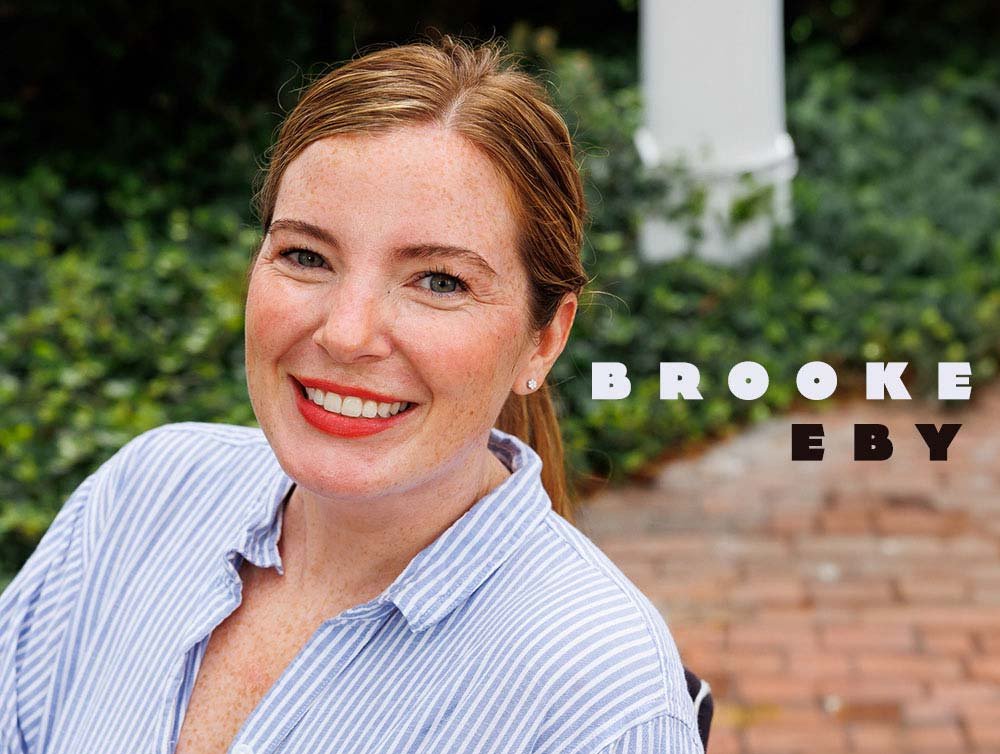
Brooke eby entered the public conversation during one of the most dramatic financial scandals of the decade, and her role in the case continues to shape how regulators, investors, and everyday users think about digital assets.
Introduction: Why Brooke Eby Matters in 2026
The name Brooke eby is now associated with a specific turning point in financial history, and understanding who she is helps explain a great deal about modern crypto enforcement. This article is not an endorsement of any person, platform, or investment product. Instead, it is an educational overview designed to help readers understand the legal landscape surrounding digital assets, using the career of Brooke eby as a lens through which to view it. For deeper context on the technology and business forces shaping this space, readers can also explore AI Power Digest for ongoing coverage.
Who Is Brooke Eby? A Brief Biography
Brooke eby is a former federal prosecutor who served as an Assistant United States Attorney in the Southern District of New York, one of the most influential prosecutorial offices in the country. During her tenure, she focused on complex financial crimes, and she became best known to the public for her work on high-profile cryptocurrency cases.
The professional trajectory of Brooke eby illustrates a common path in white-collar criminal law: rigorous legal training, a commitment to public service, and exposure to cases that test the boundaries of existing statutes. Before her work brought her into the spotlight, Brooke eby spent years building expertise in financial fraud, securities law, and the mechanics of money movement across borders. This foundation proved essential when the Department of Justice began devoting greater resources to cryptocurrency-related investigations in the early 2020s.
It is worth noting that Brooke eby, like all prosecutors, operated within a system designed to establish proof beyond a reasonable doubt. The fact that her name became widely recognized is a reflection of the scale and visibility of the cases she handled rather than any personal marketing effort. Her visibility is a byproduct of public interest in the outcomes of these cases, not a campaign to build a public profile.
Brooke Eby and the FTX Collapse: The Case That Defined a Generation
The most prominent chapter in the public story of Brooke eby involves the prosecution of Sam Bankman-Fried and the implosion of FTX, the cryptocurrency exchange that once ranked among the largest in the world.
The Background of the FTX Case
FTX, founded in 2019, grew rapidly by offering leveraged trading products and aggressive marketing, including high-profile sponsorships of sports teams and celebrities. Behind the scenes, however, the company was moving customer funds to a related trading firm, Alameda Research, in what prosecutors ultimately described as a brazen scheme to defraud investors. The exchange’s meteoric rise was built on a foundation that, according to the government, was structurally unsound.
When FTX filed for bankruptcy in November 2022, more than a million creditors were left holding claims against a company with insufficient assets. The scale of the collapse rivaled major fraud cases of previous decades, and the Department of Justice moved quickly to bring charges. The case attracted global attention not only because of the amounts involved, but because it raised fundamental questions about how lightly regulated the cryptocurrency industry had become. For a detailed account of the exchange’s history and collapse, readers can consult Wikipedia’s overview of FTX, which provides a well-sourced timeline of the events.
Brooke Eby’s Role in the Prosecution
Brooke eby was part of the team of prosecutors who built the criminal case against Sam Bankman-Fried. According to public court filings and reporting on the case, the prosecution argued that Bankman-Fried knowingly misappropriated customer deposits to fund Alameda’s risky bets, enrich himself, and influence political campaigns. The government’s case rested on a combination of internal communications, financial records, and testimony from cooperating witnesses who had been inside the organization.
The trial, which took place in the fall of 2023, presented a detailed picture of how funds moved between entities and how public statements diverged from private reality. Brooke eby’s involvement placed her at the center of a case that many legal scholars described as a watershed moment for cryptocurrency enforcement. The proceedings were closely watched by the financial industry, because the outcome would signal how far existing criminal law could reach into the digital asset space. Official statements from the U.S. Department of Justice confirmed the charges and provided authoritative details about the prosecution’s theory of the case.
In December 2023, a jury convicted Bankman-Fried on multiple counts, including wire fraud, securities fraud, and conspiracy to commit money laundering. Brooke eby’s name appeared in coverage of the verdict as part of the prosecution team credited with securing the conviction. The sentencing that followed drew further attention to the legal principles at stake and to the individuals, including Brooke eby, who had argued the government’s case.
The Significance of the Brooke Eby Case for Crypto Law
The FTX prosecution, in which Brooke eby played a visible role, sent a clear signal to the digital asset industry: regulators would pursue individuals, not just companies, when fraud was alleged. This distinction matters, because it means that executives cannot hide behind corporate structures or the novelty of their technology when they are accused of misusing customer funds.
Legal analysts pointed out that the case relied heavily on traditional fraud statutes rather than novel crypto-specific legislation. This is an important distinction, because it suggests that existing criminal law, properly applied, can address many of the harms associated with failed crypto ventures. The fact that Brooke eby and her colleagues succeeded using conventional tools was interpreted by many in the industry as both a reassurance and a warning.
For the broader community, the work of Brooke eby and her colleagues demonstrated that the legal system could move faster than many expected in response to a major crypto failure. The speed of the prosecution, the breadth of the charges, and the clarity of the verdict all contributed to a sense that the regulatory ambiguity in crypto was narrowing.
Brooke Eby’s Broader Career at the DOJ
Beyond the FTX case, Brooke eby’s career at the Department of Justice encompassed a range of financial crime prosecutions. Public records and professional biographies indicate that she worked on matters involving market manipulation, insider trading, and the movement of illicit funds across international borders. These cases required the same core skills: tracing money, interviewing witnesses, and building coherent narratives from complex financial data.
This body of work is significant because it shows that Brooke eby’s expertise was not limited to a single high-profile case. The skills she developed in investigating complex financial networks translated directly to the crypto space, where tracing transactions across blockchains and exchanges is a central challenge. A prosecutor who understood how traditional financial instruments worked was well positioned to understand how those same principles appeared, in new form, within decentralized ledgers.
Understanding the full scope of Brooke eby’s professional life also helps contextualize why prosecutors with her background were increasingly assigned to digital asset cases in the early 2020s. The DOJ, like regulators around the world, was ramping up its cryptocurrency enforcement capacity, and experienced white-collar prosecutors were the natural fit. The institutional knowledge accumulated by Brooke eby and her peers helped shape how the government approached an industry that was evolving faster than the law.
What Brooke Eby’s Work Means for Crypto Investors
For readers of AI Power Digest who are involved in cryptocurrency, the career of Brooke eby offers several practical lessons. These are not investment recommendations, but rather observations about how enforcement actions shape the environment in which digital assets operate. The legal system is part of the risk landscape, and understanding how it functions is as important as understanding tokenomics.
First, the FTX case illustrates the importance of custody and counterparty risk. When Brooke eby and her team demonstrated that customer funds had been commingled and misused, they highlighted a risk that every crypto participant should evaluate: who holds your assets, and how are they being used? In traditional finance, deposit insurance and regulatory oversight provide a backstop. In crypto, those protections are far less consistent, which makes due diligence on the custodian essential. To compare exchange reliability and track record, investors regularly consult data aggregators like CoinGecko and CoinMarketCap, which provide transparent metrics on trading volume, user trust scores, and historical exchange performance.
Second, the case underscores the value of independent verification. The promises made by FTX and Alameda Research turned out to be unsupported by the underlying financial reality, a pattern that has repeated in other crypto failures. Brooke eby’s prosecution relied heavily on documentary evidence that contradicted public statements, a reminder that marketing claims and legal facts can diverge dramatically. If a platform makes extraordinary claims, the burden of proof should fall on the platform, not the investor.
Third, the outcome suggests that regulatory attention to crypto is not a temporary phenomenon. The resources that Brooke eby and her colleagues devoted to the FTX case reflect a sustained institutional commitment, and investors should plan for continued scrutiny of the sector. Enforcement actions create real consequences, and the legal framework surrounding digital assets is likely to become more, not less, complex over time.
After the DOJ: Where Brooke Eby Is Now
In recent years, Brooke eby has transitioned from public service to private practice, a common move for experienced prosecutors. While specific client details are typically confidential, her post-DOJ work reportedly involves advising firms on compliance, risk management, and investigations related to digital assets. This kind of work draws directly on the expertise she developed during her years as a prosecutor.
This career shift is worth noting because it reflects a broader trend: former regulators and prosecutors are increasingly being hired by the very industries they once oversaw. The knowledge that Brooke eby and others bring to these roles is valuable, but it also raises questions about the revolving door between government and private sector finance. The same analytical skills that make someone an effective prosecutor can make them a highly paid consultant, and the line between public service and private advantage is not always clear.
Readers should approach claims about Brooke eby’s current activities with the same skepticism they apply to other financial information. Without direct confirmation from Brooke eby herself or verifiable public records, any specifics about her present work should be treated as unconfirmed. The most reliable sources remain official filings, regulatory announcements, and reputable journalism that attributes its information clearly.
Lessons from the Brooke Eby Story: How to Verify Crypto Claims Yourself
The narrative surrounding Brooke eby and the cases she worked on offers a useful framework for evaluating information in the crypto space generally. Here are some principles worth keeping in mind, drawn from the pattern of conduct that her prosecutions exposed.
Check the source. When Brooke eby’s name appears in a news article or court document, verify that the source is reputable and that the claim being attributed to her is accurately reported. A name can be misquoted, and context can be dropped in summaries.
Look for primary documents. Court filings, regulatory announcements, and official exchange disclosures provide more reliable information than social media summaries or third-party analyses. The record created by Brooke eby and her colleagues in the FTX case exists in the public docket, and anyone can review it directly.
Be skeptical of guaranteed returns. The FTX case, in which Brooke eby helped secure a conviction, involved promises of outsized yields that ultimately proved illusory. Promises of consistent high returns are, in almost all cases, a warning sign rather than an opportunity.
Understand the regulatory environment. The work of Brooke eby and her colleagues shows that crypto businesses operating without proper licensing and disclosure face real legal consequences. Compliance is not optional, and the absence of enforcement does not mean the absence of risk. For authoritative information on how securities law applies to digital assets, readers can review guidance published by the U.S. Securities and Exchange Commission, which maintains a dedicated section on digital asset securities.
Diversify your information sources. Relying on a single narrative, whether it comes from a platform’s marketing or a single journalist’s thread, leaves you vulnerable to incomplete or biased information. The Brooke eby story, like most legal stories, has many perspectives, and the full picture emerges only when you read widely.
Frequently Asked Questions About Brooke Eby and Crypto Enforcement
Q: Who is Brooke eby, and what is she known for?
Brooke eby is a former Assistant United States Attorney in the Southern District of New York who gained public recognition for her role in the prosecution of Sam Bankman-Fried and the FTX cryptocurrency exchange scandal. Her work on the case brought her name into widespread coverage by financial and legal news outlets.
Q: What was Brooke eby’s specific role in the FTX case?
Brooke eby served as part of the prosecution team that brought criminal charges against Sam Bankman-Fried, leading to his conviction in December 2023 on charges including wire fraud and securities fraud. The team’s work involved extensive financial investigation and the presentation of evidence at trial.
Q: Is Brooke eby still working for the Department of Justice?
Public records suggest that Brooke eby has moved from her role at the DOJ into private practice, though the exact details of her current position are not fully confirmed in public filings. Anyone considering professional engagement with her should verify her current affiliation independently.
Q: What does the Brooke eby case mean for everyday crypto investors?
The enforcement actions associated with Brooke eby highlight the importance of evaluating counterparty risk, verifying claims independently, and understanding that crypto platforms can face the same legal scrutiny as traditional financial institutions. These are risk management principles, not investment recommendations.
Q: Can I invest based on information related to Brooke eby or similar enforcement stories?
No. Information about enforcement actions, prosecutions, and the careers of figures like Brooke eby is informational in nature and should not be treated as a basis for investment decisions. Legal outcomes and personnel movements do not constitute investment advice.
Q: Where can I learn more about the legal work of Brooke eby?
Official sources such as Department of Justice press releases, court records from the Southern District of New York, and reputable legal news outlets provide the most reliable information about cases involving Brooke eby. Primary documents are always preferable to secondary summaries.
Q: How should I evaluate crypto platforms in light of cases like the one Brooke eby worked on?
Treat every platform as a counterparty whose integrity you must verify yourself. Look for evidence of regulatory licensing, independent audits, and transparent custody arrangements, and be wary of any entity that resists scrutiny or promises returns that seem too good to be true.
Conclusion
The story of Brooke eby is, at its core, a story about accountability in financial markets, whether those markets trade in traditional securities or digital tokens. Her work on the FTX case and other prosecutions helped establish that the legal tools designed to protect investors in conventional finance could, with adaptation, address the unique challenges posed by cryptocurrency. The cases she worked on remain reference points for regulators, legal scholars, and investors alike.
For readers of AI Power Digest, the takeaway is not about any single individual but about the systems that individual represents. A robust legal framework, independent verification of claims, and healthy skepticism toward promises of easy returns are the best defenses against the kinds of fraud that Brooke eby and her colleagues spent years investigating. The most valuable lesson is a procedural one: verify, cross-check, and approach every financial claim, no matter how authoritative the messenger appears to be, with an independent mindset.
This article is for informational and educational purposes only. It does not constitute financial, legal, or investment advice. The career of Brooke eby and the cases discussed are a matter of public record, but readers should verify current details through primary sources before making any decisions based on the information presented here.