
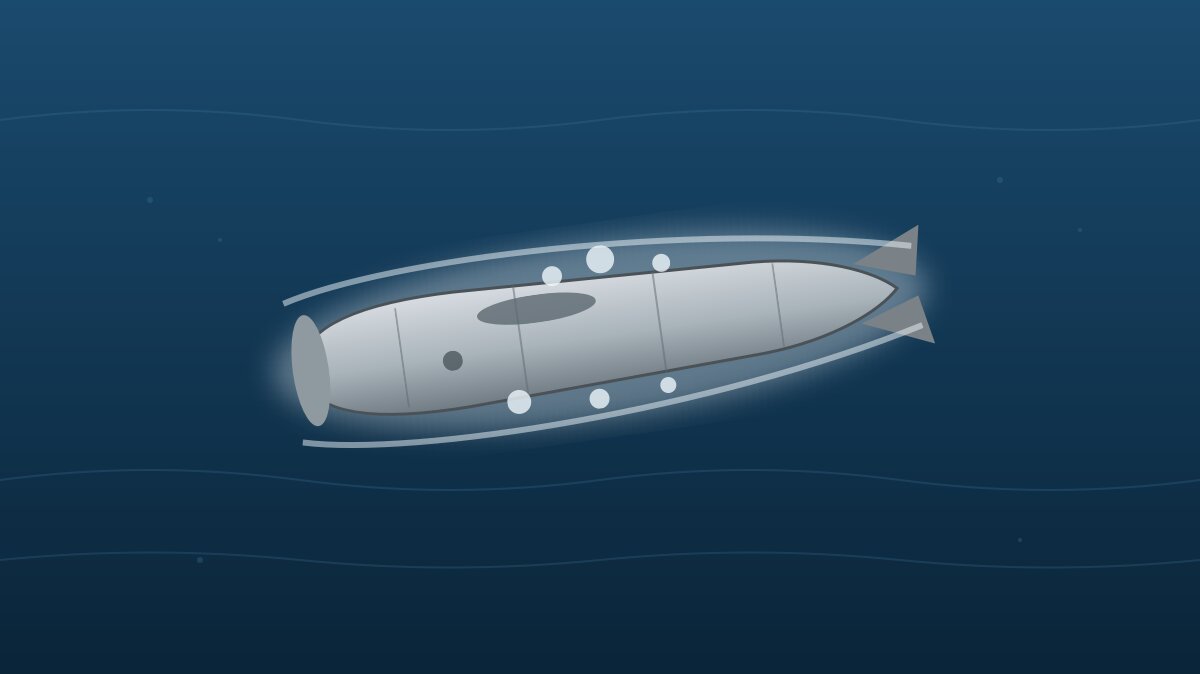
Iran’s Islamic Revolutionary Guard Corps says it pulled off a significant intelligence win this month, announcing that its navy had captured an advanced American underwater drone near the Strait of Hormuz. The IRGC captured American underwater drone story has since become a genuine point of dispute between Tehran and Washington, with both sides offering different accounts of exactly what happened.
Here’s a clear, fact-based breakdown of the incident, what each side is claiming, the technology involved, and why analysts say the loss matters regardless of how it’s ultimately characterized.
What the IRGC Claims Happened
According to Iran’s Revolutionary Guard, its navy captured a U.S. unmanned underwater vehicle at the entrance to the Strait of Hormuz on September 8, 2026, during what it described as a complex intelligence and operational mission carried out at dawn.
The IRGC’s own statement was notably assertive in tone, describing the vessel as “one of the most modern, intelligent and unmanned submarines of the terrorist American army” and referring to it as a “prize.” Iranian officials said the drone had been delivered to the U.S. military in 2025 and promised that images and footage of the captured vessel would be released “in the coming hours.”
Iranian state media, through the Tasnim news agency, identified the recovered vessel as an Anduril Dive-LD autonomous underwater vehicle.
What the U.S. Military Says Happened
Washington’s account tells a noticeably different story, though it doesn’t dispute that Iran ended up with the drone. According to U.S. Central Command (CENTCOM):
- The underwater drone had malfunctioned more than a day earlier while surveying regional waters in support of ongoing U.S. operations.
- A Navy spokesperson told DefenseScoop the vessel was “essentially dead in the water for more than a day” before Iranian forces reached it.
- CENTCOM described it as an older model that did not collect sensitive data and was not carrying classified sonar or radar equipment.
In other words, the U.S. characterization is closer to “we lost a disabled drone that Iran later found,” rather than the dramatic capture narrative Tehran has promoted. Reuters noted it could not independently verify the exact date, location, or Iran’s specific account of how the vessel was recovered.
Confirmation From an Unexpected Source
What turned this from a disputed claim into a confirmed loss was an unusual, direct acknowledgment: Palmer Luckey, founder of Anduril Industries — the American defense technology company that builds the Dive-LD — confirmed the capture himself on social media.
Luckey struck a notably calm tone about the loss, explaining that the unmanned vehicle was specifically designed to operate in hostile territory where capture was always an expected possibility. He also credited the drone with having provided significant operational value to U.S. forces in the region over several months before the incident.
That confirmation from the manufacturer itself is a big part of why this story moved quickly from an unverified Iranian claim to a widely reported, substantially confirmed event — even as the two sides continue to disagree on the details.
What Is the Anduril Dive-LD?
Understanding the technology involved helps explain why this incident has drawn attention from military analysts. According to specifications published by Anduril:
- The Dive-LD measures approximately 5.8 meters in length and 1.2 meters in diameter, weighing close to 2.7 metric tons.
- It can dive to depths of up to 6,000 meters.
- It’s capable of autonomous missions lasting up to 10 days without returning to base.
- Its designed uses include reconnaissance, intelligence gathering, mine countermeasures, and seabed mapping.
- It’s built as part of a class of systems designed for missions where deploying human personnel would be either high-risk or cost-prohibitive.
Naval analysts have noted that photos and footage released by Iranian state media show block-letter hull labeling and a physical profile consistent with the Dive-LD, reinforcing the identification even without full independent verification of every detail in Iran’s account.
Why This Incident Matters Beyond the Drone Itself
Losing a single autonomous vehicle might sound like a minor technical footnote, but defense analysts point to a more significant concern: reverse engineering.
- Bryan Clark, a senior fellow at the Hudson Institute’s Center for Defense Concepts and Technology, said Iranian engineers “could definitely reverse-engineer the mechanical systems” of the captured drone, pointing to Iran’s history with previously captured American aircraft.
- Analysts note the drone’s software carries built-in defenses, meaning the mechanical hardware is likely more exposed to reverse engineering than any sensitive software or data systems.
- There’s also a possibility that recovered technology or insights could be shared with Iranian allies, including Russia or China, extending the potential strategic impact beyond Iran alone.
This isn’t the first time Iran has faced this exact situation. In 2011, Iran captured a U.S. RQ-170 Sentinel stealth reconnaissance drone, a loss serious enough that then-President Obama publicly asked Tehran to return it. Iran also briefly seized U.S. Navy Saildrones in the region back in 2022 before eventually releasing them.
The Broader Regional Context
This drone incident hasn’t happened in isolation. It comes amid a period of heightened military tension between the U.S. and Iran in and around the Strait of Hormuz, a critical global shipping chokepoint.
Around the same period, multiple outlets reported that:
- U.S. forces struck several Iranian oil tankers following attacks on U.S. Navy vessels.
- Iran’s Revolutionary Guard claimed to have struck American vessels and additional oil tankers in the Gulf in what it described as retaliation.
- Iran separately claimed to have shot down a U.S. MQ-1 drone over the Hormuz area — a claim that, like parts of the underwater drone story, has not been independently confirmed.
- The U.S. Treasury Department expanded sanctions targeting Iran’s civilian aviation sector the same week, citing its role in transporting weapons and illicit cargo.
Given the number of competing, difficult-to-verify claims coming from both sides during this period, it’s worth treating specific details — casualty figures, exact dates, and tactical descriptions — with some caution until independently confirmed by neutral sources.
Frequently Asked Questions
1. Did Iran actually capture a U.S. underwater drone? Yes, in the sense that Iran did recover a U.S. Navy drone — this was confirmed by Anduril founder Palmer Luckey. However, the U.S. military disputes Iran’s framing of the incident as a dramatic “capture,” describing it instead as the recovery of a drone that had already malfunctioned.
2. What model of drone was captured? Iranian state media and independent naval analysts identified it as an Anduril Dive-LD, a large autonomous underwater vehicle built by the American defense company Anduril Industries.
3. Was the captured drone carrying sensitive military technology? According to CENTCOM, the drone was an older model that did not collect sensitive data and was not equipped with classified sonar or radar systems.
4. Could Iran reverse-engineer the drone? Defense analysts say Iran could likely reverse-engineer the drone’s mechanical systems, based on its history with previously captured American aircraft, though the drone’s software reportedly includes built-in defenses.
5. Has this happened before? Yes. Iran captured a U.S. RQ-170 Sentinel stealth drone in 2011, and briefly seized U.S. Navy Saildrones in the Arabian Gulf in 2022 before releasing them.
6. Why did the drone end up in Iranian hands? According to the U.S. military, the drone malfunctioned and was inactive in the water for more than a day before Iranian forces reached it, rather than being actively seized during an operation, as Iran’s account suggests.
7. Is this incident connected to wider U.S.-Iran tensions? Yes. It occurred during a period of escalated military activity between the two countries around the Strait of Hormuz, including reported strikes on vessels from both sides and expanded U.S. sanctions on Iran.
Final Thoughts
The story of the IRGC captured American underwater drone is a clear example of how the same event can be described very differently depending on who’s telling it. Iran has framed the incident as a significant intelligence victory, while the U.S. has downplayed its severity, attributing the loss to a mechanical malfunction rather than an active seizure. What’s not in dispute, thanks to confirmation from the drone’s own manufacturer, is that Iran now possesses U.S. military hardware — and defense analysts widely expect Tehran to attempt reverse engineering it, regardless of which side’s narrative about the capture itself turns out to be more accurate.
As with many rapidly developing stories involving competing military claims, it’s worth watching for further independent verification as more details emerge.