
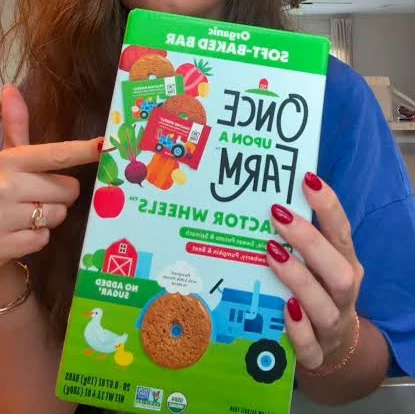
The Once Upon a Farm Tractor Wheels recall, announced on October 30, 2026, involves a popular organic toddler snack bar that the U.S. Food and Drug Administration says may pose a serious choking hazard for young children. If you have these bars in your pantry, diaper bag, or car, the short version is simple: do not serve them, and follow the instructions from the FDA and the company. This guide explains what has been reported, what is still unclear, what to do next, and how to think about choking risks and recalls more broadly, using only information from official and published sources. For more plain-English explainers on health, safety, and technology, you can browse AI Power Digest.
A quick note before we begin: this article is for general information and is not medical advice. In an emergency, call 911. For questions about your child’s health, contact a doctor or other qualified health care provider. Recall details can change, so check the official notices linked below.
What Is the Once Upon a Farm Tractor Wheels Recall?
According to the FDA’s consumer advisory, the agency is advising people not to buy or serve Once Upon a Farm Tractor Wheels Organic Toddler Soft-Baked Bars. The advisory covers all flavors, all quantities, and all lot codes and expiration dates. The FDA says the firm has agreed to initiate a recall.
The company has also published its own announcement. In a press release on its investor relations site, Once Upon a Farm said it is voluntarily recalling the Tractor Wheels soft-baked bars out of caution, is coordinating with the FDA, and acknowledged that it “fell short” of parents’ trust. The title of the announcement also refers to reformulation of the product, although the text I reviewed did not include details about what a reformulation would involve.
Which Products Are Affected
The company’s release names three varieties: Apple, Sweet Potato, & Spinach Tractor Wheels; Strawberry, Pumpkin, & Beet Tractor Wheels; and Banana, Pumpkin & Cauliflower Tractor Wheels. The FDA’s advisory is broader in wording, saying all flavors, quantities, and varieties are covered, and it shows a five-bar package of the strawberry, pumpkin, and beet variety as an example. In practical terms, if your product is a Tractor Wheels toddler bar from this brand, treat it as part of the recall.
Neither source, in the text I reviewed, listed UPC codes or specific lot numbers, because the advisory applies regardless of lot code or expiration date. The company states that no other Once Upon a Farm products are affected by the recall. That statement comes from the company, so parents who have other products from the brand may still want to check the official notices for updates.
What the Hazard Is
The FDA says that when chewed, the product reportedly forms a dry, sticky mass that may not be dislodged by standard choking interventions, including back blows and the Heimlich maneuver. That detail is what makes the Once Upon a Farm Tractor Wheels recall especially notable, because it describes a texture problem rather than a simple case of a piece being too large.
The FDA also says it has received several reports of toddlers aged 1.5 to 2.5 years experiencing complete airway obstruction and being unable to breathe after eating the product. According to the agency, some incidents required emergency response and hospital observation.
How Many Incidents Were Reported
Here the two official accounts use different language. The FDA describes “several reports” of complete airway obstruction in toddlers. The company’s announcement says the recall followed three consumer complaints. These descriptions are not necessarily in conflict, since they may be counting different things, such as reports to a regulator versus complaints to a company, but readers should be aware that the numbers are not described identically.
Some news headlines, such as one syndicated by Yahoo News, used the phrase “potentially fatal.” The FDA advisory I reviewed does not report any deaths. It is accurate to say that choking can be fatal in general and that the agency considers this a serious hazard, but it would be inaccurate to say that deaths from this product have been reported based on the official notice.
What to Do If You Have Tractor Wheels Bars at Home
Parents understandably want clear steps. Here is what the official notices say, followed by some general good practice.
Steps From the FDA and the Company
The FDA advises consumers not to buy or serve the product in any flavor and to throw it away immediately. The company’s release says consumers should not open the package or use the contents, and should return the product to the place of purchase for a full refund or contact the company by email. These instructions differ slightly in emphasis, since one says to discard and the other says to return for a refund, so it is reasonable to do the following in order:
- Stop serving the bars right away, including from a diaper bag, daycare supply, or car.
- Keep the product out of children’s reach, so that no one eats it by accident while you sort out the next step.
- Check the packaging to confirm it is a Tractor Wheels bar, and read the latest instructions on the FDA’s and the company’s pages.
- Follow the refund or disposal instructions from the company and the FDA. If you plan to return the product for a refund, do not open the package, and if you are unsure which instruction applies to you, contact the company or the store where you bought it.
- Tell other caregivers, such as grandparents, babysitters, and daycare providers, who may have access to the snacks.
If Your Child Has Eaten the Bars
The FDA says that if you or your child has symptoms, you should contact a health care provider. If someone is choking and first aid has not cleared the obstruction, call 9-1-1. If your child ate the bars without any problem, there is no indication in the notices reviewed that a symptom-free child needs treatment, but a doctor or nurse is the right person to ask if you are worried.
How to Report a Problem
If your child had a reaction or a choking event involving this product, the FDA invites people to report complaints or adverse events through its Industry and Consumer Assistance resources, and it lists a contact number, 1-888-INFO-FDA (1-888-463-6332). The company lists care@uponafarm.com for consumer questions. Reporting helps regulators understand how widespread a problem is.
Where the Bars Were Sold
Knowing where a recalled product was sold helps you figure out whether you might have bought it, including as part of a multi-pack or an online order.
According to the FDA, the product was sold nationwide, online and in stores, including Costco, Target, and Walmart, and it may also have been sold elsewhere, such as Amazon.com and other third-party vendors. The agency says retailers should not sell the product. The company’s release says the bars were sold online and through distribution centers and retail stores in 45 states and Puerto Rico.
Because third-party sellers and subscription services can also ship recalled products, check your order history rather than relying only on what you remember from the store shelf. If you bought in bulk, check every box and bag.
What Is Known and What Is Still Unclear Around the Once Upon a Farm Tractor Wheels Recall
During a fast-moving recall, it is as important to know what has not been said as what has. Here is a summary based on the sources reviewed for this article.
Known, according to the FDA:
- The advisory covers all flavors, quantities, and lot codes of the toddler bars.
- Reports involved toddlers aged 1.5 to 2.5 years with complete airway obstruction, and some needed emergency response and hospital observation.
- The product was sold nationwide, online and in stores.
- The firm has agreed to initiate a recall.
Known, according to the company:
- The recall is voluntary and followed three consumer complaints.
- Three varieties are named, and no other products are said to be affected.
- Consumers should return unopened products for a full refund or contact the company by email.
Not clear from the sources reviewed:
- The exact cause of the problem, beyond the FDA’s description of the texture.
- Whether the number of reports will grow as more families come forward.
- What reformulation will involve and when a changed product might return to shelves.
- The FDA’s formal classification of the recall, which I did not see in the notices reviewed.
Treat any detail about the Once Upon a Farm Tractor Wheels recall beyond these as unverified until you see it in an official notice. Social media posts, forwarded messages, and unofficial summaries often add details that sound plausible but are not supported.
Timeline of the Announcement
Because this is a developing story, it helps to see the sequence in one place. The dates below come from the FDA’s advisory and the company’s press release.
| Date | Event | Source |
|---|---|---|
| October 30, 2026 | FDA publishes a consumer advisory telling people not to buy or serve the bars | FDA |
| October 30, 2026 (evening, Eastern time) | Once Upon a Farm announces a voluntary recall and reformulation | Company press release |
| After October 30 | Further updates, refund details, and retailer actions may follow | Check official pages |
Both notices appeared on the same day, which suggests the FDA and the company were coordinating, as the company states. Beyond that, the sources reviewed do not say when the first complaints were received or how long the product had been on the market in its current form, so those questions remain open.
What the Once Upon a Farm Tractor Wheels Recall Means for Parents of Older Children
The reported incidents involved toddlers aged 1.5 to 2.5 years, but the FDA advisory is not limited by age. It tells people not to buy or serve the product at all. Families with older children, babysitters, or relatives who sometimes share snacks should follow the same instruction, since a bar left within reach could be eaten by a younger sibling or visitor.
Talking to a Child After a Scare
If your child experienced a choking episode, it can be frightening for the whole family. A pediatrician can advise on any follow-up, including whether your child should be checked after an event that needed emergency response. Children often take their emotional cues from adults, so staying calm and offering simple reassurance can help. If a child becomes fearful of eating after a scare, mention it to the pediatrician, who can suggest ways to rebuild comfort around mealtimes. This is general information and not a substitute for individual medical advice.
How a Food Recall Like This Typically Works
Many people are unsure what the word “recall” means in practice. In general, a recall is an action to remove a product from the market because it may be unsafe. Many food recalls in the United States are voluntary, which means that the company chooses to initiate the recall, often in coordination with the FDA, as the company says it is doing here. The FDA also issues advisories and alerts to the public when it believes consumers should be told directly.
For families affected by the Once Upon a Farm Tractor Wheels recall, the practical effect is the same: stop using the product, follow the instructions, and watch for updates. Over the following days, a company may update the list of affected products, add retailers, or publish additional details. The FDA’s own page can also change, so check back rather than relying on a single early article.
Why the FDA Issued a Consumer Advisory
An advisory like this one is a way for the agency to reach consumers directly, since many people will not hear about a recall from the manufacturer. In this case the language is direct: do not buy or serve the product, and throw it away. That clarity is helpful for parents who need a simple instruction.
Keeping Recalled Snacks Away From Children While You Sort It Out
Between learning about a recall and getting a refund, there can be a gap of hours or days. During that time, the biggest risk is accidental access. Put the bars somewhere a toddler cannot reach, such as a high cabinet or a bag that is out of sight, and consider writing a note on the package so that another adult does not serve it by mistake. If you are returning the product, keep it unopened, as the company’s release instructs, and set it aside with your receipt or order confirmation.
If you have a daycare or a caregiver who prepares snacks, send a short message with a link to the FDA’s advisory instead of a summary, so that they can read the official wording. Clear, simple communication reduces the chance that a recalled item ends up on a plate. It also helps to check the pantry, the diaper bag, the stroller pocket, the car, and any place where snacks tend to collect.
Why Some Soft, Sticky Foods Can Be Choking Risks
It might seem surprising that a soft-baked toddler bar could be a choking hazard, since people usually picture hard candy, nuts, or whole grapes. But choking risk depends on several features, including shape, size, and texture.
According to the California Department of Public Health, children aged 3 and younger are most vulnerable because they are still learning to chew and swallow, and the risk from a food rises with its shape, size, and consistency. North Dakota State University Extension similarly explains that children under 5 have a harder time chewing and grinding food and may swallow large or poorly chewed pieces whole, and it lists sticky or chewy foods among the common hazards alongside hard foods and round foods that fit snugly in the throat.
The FDA’s description of a dry, sticky mass that may resist standard first aid fits that general picture. A sticky texture can clump and cling in a way that a child cannot easily cough up, which is why texture matters as much as size.
Choking Prevention Basics for Toddlers
The Once Upon a Farm Tractor Wheels recall is a good reminder to review general safety habits. These are not specific to this product, and they apply to every snack you offer.
Supervise Every Meal and Snack
The California Department of Public Health advises watching children during all meals, encouraging slow eating, and having them sit while they eat. It also notes that children should not eat in a car when the driver is the only adult, since no one can help if choking occurs. NDSU Extension adds that children should not eat while running, walking, or laughing, and that an adult, not a sibling, should supervise.
Prepare Foods Appropriately
NDSU Extension recommends cutting food into small pieces, with foods for infants up to age 1 cut very small, and notes that toddlers can manage somewhat larger bites. The California agency suggests pieces about the size of a nickel for young children. If you are unsure what is appropriate for your child’s age and abilities, ask your child’s doctor or a registered dietitian.
Know Which Foods Tend to Be Higher Risk
Both sources list foods that are commonly associated with choking in young children, including hot dogs, whole grapes, nuts, popcorn, hard candy, chunks of peanut butter, and raw vegetables. The point is not to memorize a list, but to recognize patterns: foods that are hard, round, sticky, or difficult to chew deserve extra care.
Learn First Aid in Advance
NDSU Extension suggests that caregivers learn infant and child choking first aid and CPR through courses offered by organizations such as the American Heart Association or the American Red Cross. Reading about first aid is not the same as practicing it, so a hands-on class is worth considering for parents, grandparents, and daycare providers. The California agency also suggests asking your child’s doctor or nurse what to do if a child chokes.
A Checklist for Evaluating Any Packaged Toddler Snack
You cannot guarantee that a product is safe simply by reading a label, but you can build habits that reduce risk and keep you informed.
Step 1: Consider the Texture
Ask whether the snack dissolves, crumbles, or becomes sticky and doughy when chewed. Products that form a dense, sticky mass in the mouth deserve extra caution for young children.
Step 2: Match the Food to Your Child’s Chewing Skills
Age ranges on packaging are a starting point, not a guarantee. Children develop chewing skills at different rates, and some are more prone to stuffing food in their mouths.
Step 3: Supervise Regardless of Marketing
Phrases like “toddler-friendly” or “soft-baked” describe a product’s intended use. They do not remove the need for supervision.
Step 4: Check for Recalls Regularly
Make it a habit to look at the FDA’s recall and advisory pages, especially for products you buy often. You can also sign up for retailer or manufacturer notifications if they offer them.
Step 5: Keep Purchase Records
Order histories, loyalty-card records, and receipts make it easier to confirm whether you bought a recalled item and to claim a refund.
Step 6: Save Packaging for Lot Codes
When a product is recalled by lot number, you need the package to confirm whether yours is included. For this recall, the advisory applies to all lots, but in other cases the code matters.
Step 7: Trust Official Sources Over Rumors
During a recall, rely on the FDA, the manufacturer, and reputable news outlets that cite them. Be cautious about screenshots and forwarded messages.
Common Mistakes During a Food Recall
Even attentive parents can make errors when a recall is announced. Here are the most common ones.
Assuming a snack is fine because your child ate it before. A previous uneventful experience does not guarantee safety, particularly when the hazard involves texture and chewing.
Giving the product away or donating it. If a product is recalled, do not pass it along to friends, food banks, or relatives.
Opening a package to check it. The company’s release says consumers should not open the package, so follow the refund instructions before you handle the product further.
Ignoring other caregivers. Grandparents, babysitters, and daycares may have their own supplies.
Trusting unofficial recall messages. Scammers sometimes imitate recall notices to collect personal information. Use contact details that come from the company’s own website or the FDA’s pages, and never share payment details to receive a recall refund.
Overreacting to unverified claims. Share only what comes from official sources, and avoid spreading rumors about other products from the brand without evidence.
Waiting for perfect information. The instruction to stop serving the product is clear, and you do not need to wait for more details to act on it.
Where to Find Reliable Recall Information
For any food recall, start with the FDA’s website, which posts advisories and recall notices, and with the manufacturer’s official announcement. For news, use outlets that cite those sources. For health questions, contact your child’s pediatrician or another qualified provider. Keep a note of the date you checked each source, because recall information can be updated.
Once Upon a Farm Tractor Wheels Recall FAQ
What is the Once Upon a Farm Tractor Wheels recall?
It is a recall of the company’s Tractor Wheels organic toddler soft-baked bars, announced on October 30, 2026, because of a potential choking hazard. The FDA advises consumers not to buy or serve the product in any flavor.
Which flavors are included?
The company’s release names Apple, Sweet Potato, & Spinach; Strawberry, Pumpkin, & Beet; and Banana, Pumpkin & Cauliflower. The FDA advisory covers all flavors, quantities, and lot codes.
Why is the product considered a choking hazard?
The FDA says the product reportedly forms a dry, sticky mass when chewed that may not be dislodged by standard choking interventions, including back blows and the Heimlich maneuver.
Have any children been hurt?
The FDA says it received several reports of toddlers aged 1.5 to 2.5 years with complete airway obstruction, and some incidents required emergency response and hospital observation. The company says the recall followed three consumer complaints. The FDA advisory reviewed does not report any deaths.
What should I do with the bars I have?
The FDA says not to buy or serve them and to throw them away. The company says not to open the package and to return the product to the place of purchase for a full refund or contact it by email. If you are unsure which applies, follow the latest instructions on the FDA’s page and contact the company or retailer.
Where were the bars sold?
According to the FDA, nationwide, online and in stores, including Costco, Target, and Walmart, and possibly Amazon.com and other third-party vendors. The company says they were sold in 45 states and Puerto Rico.
Are other Once Upon a Farm products affected?
The company says no other products are impacted by the recall. Check the official notices for updates if you have other items from the brand.
What should I do if my child is choking?
Call 9-1-1 if first aid has not cleared the obstruction, as the FDA advises. Consider taking a hands-on infant and child first aid course so you know what to do before an emergency happens.
Conclusion: Acting Calmly on the Once Upon a Farm Tractor Wheels Recall
The Once Upon a Farm Tractor Wheels recall is a clear example of why it pays to stay informed about the food your children eat. The core instruction from the FDA is straightforward: do not buy or serve the bars, discard them or return them as instructed, and call 9-1-1 if someone is choking and first aid is not working. Beyond that, many questions remain, including the exact cause, the final number of incidents, and what a reformulated product might look like.
In the meantime, general choking-prevention habits are worth reviewing: supervise meals, prepare foods appropriately, learn first aid, and check recalls regularly. If you want more clear, source-based explainers on health, safety, and technology, visit AI Power Digest for fresh guides.
Disclaimer: This article is for informational and educational purposes only and is not medical, legal, or professional advice. It summarizes public information from the FDA, the company, and published safety guidance as of October 31, 2026, and the situation may change. Always follow the latest official instructions, contact a qualified health care provider about your child’s health, and call 911 in an emergency.