
Peptides have gone from a niche biochemistry topic to a mainstream wellness, fitness, and regulatory headline in just a few years. Some are life-changing medicines used by millions of people, while others are sold online with big promises and very little human research behind them. This guide separates the two groups in plain English, explains what regulators did in 2026, and gives you a practical checklist for judging claims yourself. If you like clear, source-based explainers on health tech, AI, and the digital economy, you can find more at AI Power Digest.
A quick note before we begin: this article is educational and is not medical advice. It does not tell you to use, buy, or avoid any product. Talk to a licensed clinician about your own situation.
What Are Peptides? The Basic Biology
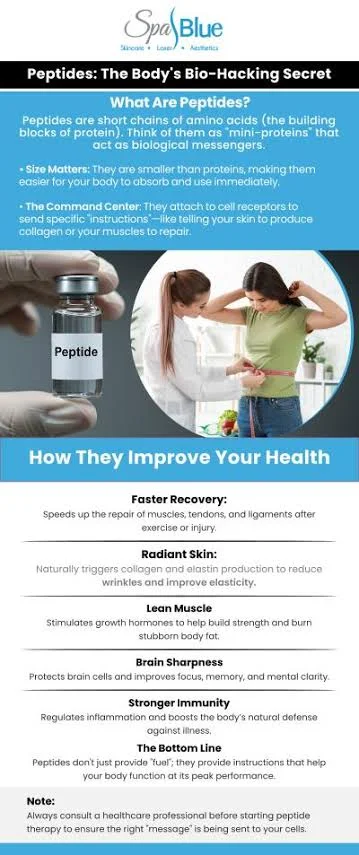
At the simplest level, peptides are short chains of amino acids, the same building blocks that make up proteins. Think of amino acids as beads, and a peptide as a short string of them. When a string gets long and folds into a complex three-dimensional shape, scientists usually call it a protein. There is no perfectly sharp line between the two, but a common rule of thumb is that peptides are shorter, often fewer than about 50 amino acids, while proteins are longer.
That simple definition matters, because it explains why the word covers such a huge range of things. A peptide can be a hormone made in your own body, a prescription drug made in a factory, a cosmetic ingredient in a face serum, or a research chemical sold in a vial with a warning label. Treating all of these as the same thing is the most common mistake newcomers make when reading about peptides.
Proteins vs. Short Chains: Why Size Matters
Size changes how a molecule behaves in the body. Proteins are usually large and are broken down in the digestive system, which is why most protein-based drugs are injected rather than swallowed. Many share that problem. Because digestive enzymes chew through peptides, a lot of therapeutic versions have traditionally been given by injection, although drug developers continue to work on tablets and other delivery methods.
Short length also means peptides tend to act quickly and are cleared from the body quickly. Medicine designers often modify a natural peptide so that it lasts longer, and some of the best-known drugs in the world are exactly that kind of engineered molecule.
Compounds Your Body Already Makes
Your body produces many peptides every day. According to a PBS NewsHour report originally published by PolitiFact, they are fragments of proteins that occur naturally and are also found in food, and they play roles in digestion, ovulation, and blood pressure regulation. Insulin, the hormone that helps control blood sugar, is a peptide. So are many signaling molecules that tell one part of the body what another part is doing.
This natural role is one reason the field attracts so much interest. If a molecule already does something useful in the body, researchers reason, then a copy or a modified version might be used as a treatment. That reasoning has produced real medicines made from peptides. It has also been stretched to justify products that have never been tested properly in people, which is where the confusion starts.
FDA-Approved Medicines With Trial Data
Before looking at the controversial side of this topic, it helps to remember that approved versions are a large and well-established category of medicine. Approval in the United States means a manufacturer submitted data from clinical trials, regulators reviewed the safety and effectiveness evidence, and the product is made under quality standards. That process is exactly what is missing for many of the products that dominate social media.
GLP-1 Drugs and Other Household Names
The best-known examples today are the GLP-1 medicines used for diabetes and weight management. The PBS and PolitiFact report lists GLP-1 drugs such as Ozempic and Zepbound among the approved medications of this type. These drugs are modified versions of a natural gut hormone, and they went through large human trials before reaching the market.
The same report also names other approved drugs in this family, including tesamorelin, which increases certain hormone production, afamelanotide, used for a light-exposure disorder, and bremelanotide, which addresses low libido. The point is not that every approved product is risk-free. Every drug has side effects. The point is that approved peptides come with human data, labeling, dosing guidance, and ongoing safety monitoring.
Collagen Supplements
A different group is sold over the counter. Collagen peptides, for example, are marketed as supplements for skin, joints, and general wellness. The PBS report notes that they are sold as supplements, which means they sit under a different regulatory framework than prescription drugs. Dietary supplements are not approved by the FDA for effectiveness before they are sold, so evidence quality and product quality can vary from brand to brand, even among peptides sold in the same store.
Popular Unapproved Peptides: What Is Being Marketed
The second group is where most of the controversy lives. These are compounds that are not approved as drugs for the uses being advertised, but are promoted by clinics, online sellers, and influencers. According to the PBS and PolitiFact article, many are injected and are popular among athletes and in the wellness community.
BPC-157 and TB-500
Two names come up more than any others. BPC-157 and TB-500 are promoted for muscle and tissue healing, including tendon and joint recovery. The marketing for these peptides often cites laboratory and animal studies. What it usually cannot cite is a large, well-controlled human trial showing that the products work for the claimed purpose, at a safe and defined dose.
Growth Hormone Secretagogues and Tanning Compounds
Other peptides, such as CJC-1295 and ipamorelin, are promoted for muscle, sleep, and cognition on the theory that they stimulate growth hormone release. Melanotan, a tanning-related compound, is another frequent topic among online sellers of peptides. The PBS report states that several of these compounds are banned for professional athletes by the World Anti-Doping Agency, a point we return to later.
Notice the pattern: the claims are broad, the target audiences are motivated, and the human evidence is thin. That does not prove any specific compound is useless or dangerous. It means the honest answer for many of them is “we do not know yet.”
Why the Evidence for Many Products Is Thin
When people say peptides are “backed by research,” it is worth asking what kind of research. Science has a ladder of evidence, and the rungs matter.
Animal Studies Are Not Human Trials
The PBS and PolitiFact report says most of the supporting evidence for the popular unapproved compounds comes from animal studies rather than human trials. Animal work on peptides is a legitimate and necessary first step, but many promising compounds fail when they reach people. A rat tendon heals faster in a lab setting, and that is interesting, yet it does not establish the right dose, the safety profile, or the effect for a human with a real injury.
Without human clinical data, the report notes, it is hard to determine proper dosing, and long-term risks are unknown. That is a significant gap, because with any compound that affects growth, healing, or hormones, the long-term picture is the part that matters most.
The Questions Researchers Keep Raising
The same article quotes Paul Knoepfler, a cell and molecular biologist at the University of California, Davis, who says the most popular peptides remain poorly understood in humans. In paraphrase, the open questions include what the right doses are, what risks arise when people combine several peptides, and whether compounds that promote new blood vessel growth could raise the risk of cancer. Those are concerns raised by a researcher, not proven harms, but they show why scientists want controlled studies before declaring a product safe.
What Good Evidence Would Look Like
If you are trying to judge the strength of a claim, look for these markers:
- Human randomized trials, ideally with a placebo or active comparison group.
- Clear dosing information tested for safety, not just a number copied from a forum.
- Independent replication, meaning other research groups found similar results.
- Published results in peer-reviewed journals, with the study design described openly.
- Safety monitoring that tracks side effects over time.
If a product claims to heal, rejuvenate, and optimize everything at once but cannot point to a single trial of that kind, treat the claim with caution.
Peptides and the Law: What Happened in 2026
Regulation is the fastest-moving part of this story, and it is easy to misunderstand. Headlines in 2026 made it sound as if certain unapproved peptides had suddenly become approved. That is not what happened, and the difference is important.
Background: Compounding and the Category 2 List
Compounding pharmacies make customized medications, usually when a patient needs something that a standard approved product cannot provide, and some have sought to offer unapproved peptides as part of that work. In the United States, the substances they may use under section 503A of the federal Food, Drug, and Cosmetic Act are governed by a “bulks list” and by interim policies. During the interim period, the FDA sorted nominated substances into categories. Category 2 was reserved for substances that raise significant safety concerns.
The PBS and PolitiFact report notes that in late 2023 the FDA barred compounding pharmacies from making more than a dozen of them, citing safety concerns. That decision is what set up the 2026 debate.
April 2026: Removals From Category 2
According to a legal analysis from the firm Frier Levitt, the FDA published a notice on April 15, 2026, scheduling a meeting of its Pharmacy Compounding Advisory Committee and republishing its interim list. The agency said it intended to remove twelve peptides from Category 2, including BPC-157, TB-500, MOTs-C, Semax, Epitalon, KPV, and Melanotan II. The analysis explains that the removals were based on the people who nominated those substances withdrawing their nominations.
Crucially, the same analysis states that removal from Category 2 does not make these substances eligible for compounding. They were not covered by the FDA’s interim enforcement discretion, which applied only to Category 1 substances. Supply is another obstacle, because many of them have only research-grade ingredients available, and research-grade material cannot lawfully be used in compounded products.
July 2026: The Advisory Committee Vote
In July 2026, the advisory committee met. As reported by ABC News, the panel narrowly voted to recommend adding six peptides, BPC-157, KPV, TB-500, MOTS-c, Epitalon, and Semax, to the list of ingredients compounding pharmacies can use. A seventh, emideltide, was rejected because of weak evidence, according to that report.
The same coverage says FDA staff scientists opposed adding every one of the peptides, and that reviewers cited inconsistent batch-to-batch formulations and the risk of harmful immune reactions. It also noted that six of the eight recently appointed committee members run clinics that offer them, and that HHS Secretary Robert F. Kennedy Jr. has publicly supported wider access. Supporters of the vote argue that regulated access could steer consumers away from an unregulated online market of “research chemicals,” while critics warn about precedent and about patients misreading a spot on the list as an endorsement.
What the Vote Does and Does Not Mean
The advisory vote is not a final decision. A summary from the law firm Buchanan Ingersoll & Rooney explains that the committee is advisory, that the FDA is not legally required to adopt any of its recommendations, and that the votes did not amend the bulks list. The same piece notes that pharmacies should not treat the votes as authorization to compound these substances, and that the next steps would involve a proposed rule, a public comment period, and a final rule, with no fixed statutory deadline.
As of late October 2026, I did not find reporting of a completed final rule. Rules and enforcement policies can change quickly, so check the FDA’s own announcements before relying on any legal summary, including this one.
“Research Use Only” Labels: Quality and Safety Red Flags
A large share of the online market labels its products “for research use only” or “not for human consumption.” That wording is a legal signal, not a quality guarantee. It usually means the seller is not claiming the product is a drug and is not holding it to the standards that apply to medicines.
The PBS and PolitiFact report says independent testing has found that advertised contents do not always match what buyers receive. That is the core consumer-safety problem. Even if a compound were safe at a certain dose in a controlled study, a vial of uncertain purity and unknown dose is a different proposition altogether, which is why caution with research peptides is sensible.
Common Warning Signs
Be skeptical when you see any of the following:
- Miracle language, such as claims that a product cures injuries, reverses aging, or works for everyone.
- No identifiable manufacturer, no lot numbers, or no independent lab report.
- Contradictory labeling, where a product is sold with medical-sounding claims but a “not for human use” disclaimer.
- Pressure tactics, like countdown timers, bundle discounts, or “limited supply” claims.
- Testimonials instead of data, with before-and-after photos but no study design.
Contamination and Consistency Risks
Peptides are manufactured chemicals, and manufacturing quality matters. Impurities, wrong concentrations, and contamination are all possible when a product is made outside pharmaceutical quality systems. The FDA reviewers described in the ABC News coverage specifically flagged inconsistent batches and the risk of harmful immune reactions, which are exactly the kinds of problems that quality controls exist to prevent.
Peptides and Sport: Anti-Doping Rules
Athletes face a separate and very strict layer of rules. The World Anti-Doping Agency maintains a prohibited list, and the PBS report notes that several of the popular unapproved compounds are banned for professional athletes.
The details can surprise people. According to the U.S. Anti-Doping Agency, some cosmetics are marketed as containing prohibited growth factors, and the agency says it is aware of five that WADA expressly prohibits even in topical products: IGF-1, acidic and basic fibroblast growth factors, platelet-derived growth factor, and vascular endothelial growth factor A. USADA states that the prohibited list has no route-dependent rules, so a topical product containing a banned growth factor is treated the same as an injectable one. It also notes that many peptides with “peptide” in the name, such as palmitoyl tripeptide-1, are not prohibited.
For competitive athletes, the takeaway is simple: do not guess. Check the product ingredients against the official resources the agency recommends, ask the anti-doping organization directly when unsure, and remember that “I did not know” is not a defense in a positive test.
Skincare and Supplements: A Different Kind of Product
Most people meet this family of molecules without ever thinking about injections. Skincare serums list cosmetic peptides such as palmitoyl tripeptide or hexapeptide, and collagen supplements are sold in powders and capsules.
These products live in a completely different regulatory and evidence landscape. Cosmetics are not required to prove they change the structure or function of the body in the way drugs do, which is why labels talk about “improving the look of fine lines” rather than treating a condition. Some cosmetic peptides have supporting studies, usually small and often funded by manufacturers, and others rely mostly on marketing. If you use these products, reasonable expectations are modest, and the main safety issues are skin irritation and allergic reactions rather than systemic effects.
A Framework for Evaluating Claims About Peptides
You do not need a science degree to judge a claim sensibly. You need a repeatable process. Here is a simple seven-step framework you can apply to any product, article, or influencer post.
Step 1: Identify Exactly What the Product Is
Find the specific compound name, not just a general label. Is it an approved drug, a compounded product, a supplement, a cosmetic ingredient, or a research chemical? The answer determines which rules and evidence apply.
Step 2: Check Whether It Is Approved for the Claimed Use
Approved drugs are listed in public databases, and the FDA’s own materials explain approval status. A product can be approved for one purpose and still be promoted for a different, unproven purpose.
Step 3: Look for Human Data
Search for clinical trials in people. If everything cited involves cells in a dish or animals, you are looking at early-stage research. That can be exciting, but it should shape how much confidence you place in the claim.
Step 4: Read the Fine Print on the Label
Phrases such as “research use only” or “not for human consumption” tell you what the seller will and will not stand behind. A product that cannot be legally sold for human use is a red flag, regardless of what the website’s headline says.
Step 5: Ask About Quality Controls
Who made it? Is there an independent test of purity and strength? Is there a lot number? Pharmaceutical products are made under defined standards. Many online products are not.
Step 6: Consider Conflicts of Interest
Ask who profits if you believe the claim. A clinic selling a protocol, an influencer with an affiliate code, or a company selling supplements has a financial interest. That does not make them wrong, but it should make you look for independent confirmation.
Step 7: Talk to a Qualified Professional
A physician or pharmacist can review your health history, your medications, and your goals, and can tell you whether an approved option exists. This step matters most for people who are pregnant, have a chronic condition, take other medications, or compete in drug-tested sports.
Common Mistakes When Reading About This Topic
Even careful readers fall into predictable traps. Here are the most frequent ones when people read about peptides.
Assuming “natural” means safe. A molecule that exists in the body can still cause harm when taken in the wrong form, dose, or combination.
Mixing up approved and unapproved products. Success stories about GLP-1 medicines are not evidence for a compound with no human trials.
Treating a regulatory vote as approval. An advisory panel’s recommendation is not the same as the FDA approving a drug, and it is not a final rule.
Believing animal results will carry over. Many treatments that work in animals fail in humans.
Trusting the label. As the PBS report notes, independent testing has found mismatches between what is advertised and what is in the product.
Ignoring anti-doping rules. Athletes can face sanctions for products they thought were harmless cosmetics or supplements.
Using forum advice as a dosing guide for peptides. Without human trials, no dose is established, and online numbers are not a safe substitute for clinical guidance.
Where to Find Reliable Information
Good research pulls from several kinds of sources. For regulatory status, go to the FDA and read its official notices rather than third-party summaries alone. For medical background, look to major medical centers, government health agencies, and peer-reviewed journals. For sports, use the anti-doping organization that governs your competition. For news, read outlets that name their sources and distinguish between what is known and what is claimed.
Keep notes with dates, especially for peptides. Policy in this area changed several times in 2026, and an article that was accurate in the spring may be incomplete by the autumn. Writing down the date you checked a fact saves you from relying on stale information.
A few practical habits help here. Read the original document whenever a headline quotes a government agency, because summaries often compress important caveats. Notice whether an article separates what is proven from what is merely promoted. Be wary of any source that earns money from the product it describes. And remember that a confident tone is not evidence; the most trustworthy writers say plainly when something is unknown, unfinished, or still being debated by experts.
Peptides FAQ
What are peptides in simple terms?
Peptides are short chains of amino acids, the building blocks of proteins. The body makes many of them naturally, including insulin, and some are manufactured as medicines or used in cosmetics and supplements.
Is every compound in this category safe?
No. Safety depends on the specific compound, the dose, the quality of the product, and the person using it. Approved peptide drugs have clinical trial data and monitoring, while many unapproved compounds have limited human evidence and unknown long-term risks.
What is the difference between approved and unapproved products?
Approved peptides, such as GLP-1 medicines, went through clinical trials and regulatory review for a defined use. Unapproved peptides have not been through that process for the uses being marketed, which means their dosing, effectiveness, and long-term safety are not established.
Did the FDA approve BPC-157 in 2026?
No. In July 2026, an FDA advisory committee narrowly voted to recommend adding BPC-157 and five other peptides to the compounding list, but the vote was advisory and non-binding. The FDA would still need to complete a formal process, and FDA staff had recommended against adding them.
What does “research use only” mean on a peptide label?
It signals that the seller is not marketing the product as a drug for human use and is not holding it to medicine-level standards. It does not guarantee purity, strength, or safety, and independent testing has reported mismatches between labels and contents.
Can athletes use these compounds?
Many are restricted. The World Anti-Doping Agency prohibits several of them and related growth factors, and the U.S. Anti-Doping Agency notes that even topical products containing certain prohibited growth factors are covered. Athletes in tested sports should verify every product with their anti-doping organization.
Are skincare and collagen products the same as injectables?
No. They are different products with different regulation and risks. Cosmetic and supplement versions are generally lower risk but also have more modest and less consistently proven effects than approved drugs.
Should I try peptides for recovery, weight loss, or anti-aging?
That is a decision for you and a licensed clinician. This article cannot tell you what is right for your health. It can tell you to check approval status, look for human trial data, be wary of unverified sellers, and get professional guidance before starting anything.
Conclusion: Reading the Peptides Story Carefully
The story here is really two stories. One is a success story of modern medicine, in which carefully tested drugs help people manage diabetes, weight, and other conditions. The other is a fast-moving marketplace of promises, in which compounds with limited human evidence are sold to people looking for faster recovery, better performance, or a younger appearance.
In 2026, regulators and advisers put that second marketplace under a spotlight. The FDA moved certain substances off its most restrictive list, an advisory committee narrowly voted in favor of adding six to a compounding list, and FDA staff opposed all of them. None of that equals approval, and the process was still unresolved when this article was written. The most useful habit you can build is a simple one: identify exactly what a product is, look for human evidence, read the label honestly, and involve a qualified professional.
If you want more clear, source-based explainers on health tech and the wider digital economy, visit AI Power Digest for fresh guides. Whatever you decide about peptides, base the decision on verified information rather than hype.
Disclaimer: This article is for informational and educational purposes only and is not medical, legal, or professional advice. It does not recommend using, buying, or avoiding any peptide product. Regulatory information reflects publicly reported developments as of October 29, 2026, and may change. Consult a licensed healthcare professional before starting any treatment, and check official regulatory and anti-doping sources for current rules.