
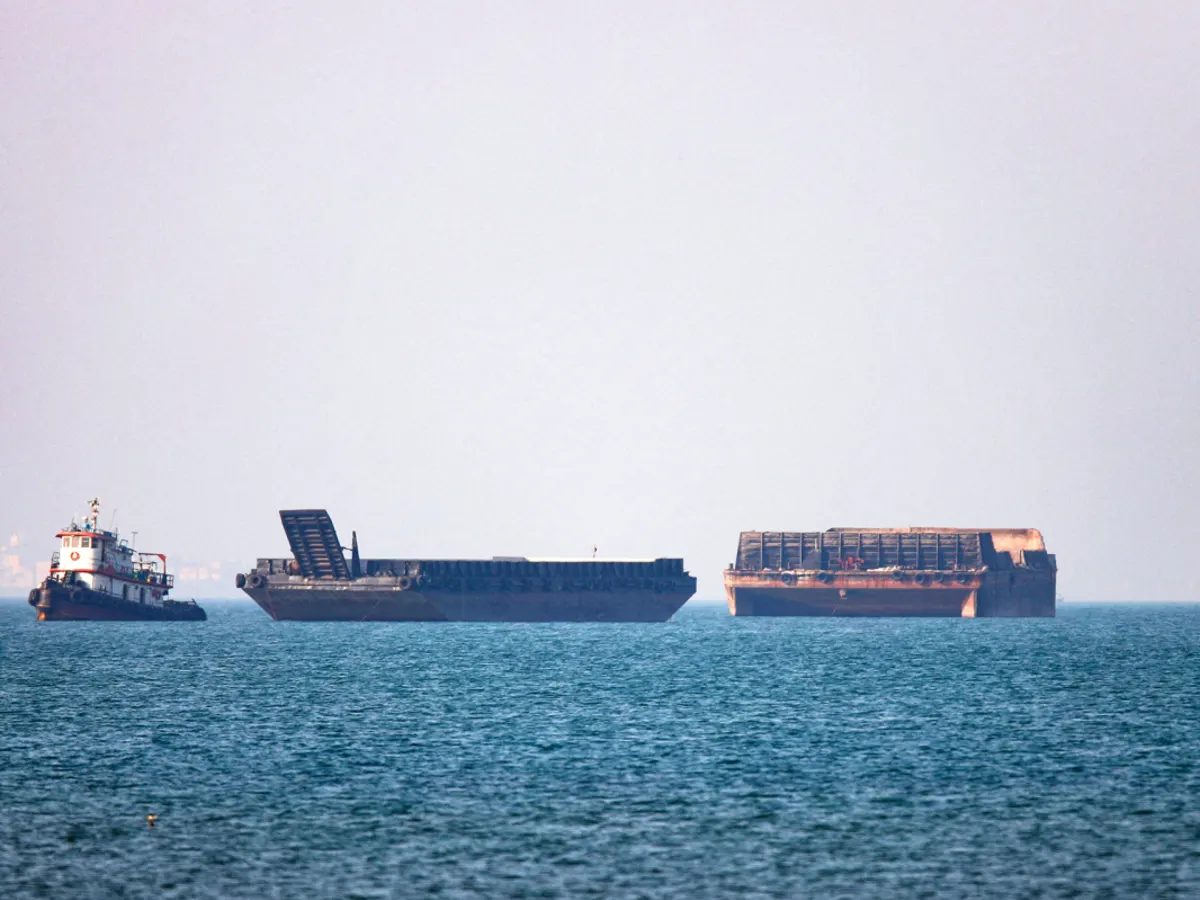
The strait of hormuz is the narrow waterway between Iran and Oman that links the Persian Gulf to the Gulf of Oman and the Arabian Sea, and in 2026 it has become the most closely watched chokepoint in global finance. Every few hours, a new headline about tanker traffic, naval blockades, or ceasefire talks sends oil prices, currency markets, and even crypto traders scrambling to reassess risk. If you have ever wondered why one stretch of water roughly the width of a large city can rattle stock exchanges thousands of miles away, this guide breaks it down in plain English.
At AI Power Digest, we cover the places where technology, money, and geopolitics collide, and few places illustrate that collision better than this strait. In the sections below, you will learn where it is, what passes through it, how the 2026 crisis unfolded, what analysts are saying about the recovery, and how to build a simple framework for judging the next headline yourself. We rely on named sources and clearly label any forecast as speculative, because the situation is fluid and numbers change quickly.
Quick note before we begin: this article is educational. It is not financial advice, and nothing here is a recommendation to buy, sell, or hold any asset.
What Is the Strait of Hormuz? A Geography Primer
To understand why the strait of hormuz matters, start with a map. The Persian Gulf is a nearly enclosed body of water surrounded by Iran, Iraq, Kuwait, Saudi Arabia, Bahrain, Qatar, the United Arab Emirates, and Oman. Almost everything those countries export by sea, including crude oil, refined fuels, liquefied natural gas, petrochemicals, and fertilizers, has to pass through a single exit. That exit is the strait of hormuz, with Iran’s coastline to the north and Oman’s Musandam Peninsula to the south.
How Narrow Is the Strait?
According to the U.S. Energy Information Administration, whose World Oil Transit Chokepoints analysis is one of the most cited references on the subject, the waterway is roughly 21 nautical miles wide at its narrowest point. That sounds generous until you learn that the navigable shipping lanes are far tighter. Large vessels follow a traffic separation scheme with an inbound lane and an outbound lane, each only about two miles wide, separated by a buffer zone of similar width.
Those tight lanes explain why the passage is so vulnerable. A few mines, a handful of fast attack boats, or even a credible threat can slow traffic dramatically, because ships cannot simply spread out and go around. When traffic through the strait of hormuz slows, insurers, charterers, and captains all respond at once, long before any physical blockage becomes total.
Who Controls the Waters?
The shipping lanes run through the territorial waters of Oman, while Iran controls the northern coastline and several strategic islands. Neither side “owns” the strait in the sense of being able to legally shut it under normal international rules, but geography gives Iran significant leverage, which is why the waterway features so prominently in Iranian military doctrine and in Western naval planning alike.
Why the Strait of Hormuz Matters for Global Energy
Energy analysts often call the strait of hormuz the world’s most important oil chokepoint, and the numbers explain why. Before the 2026 conflict, the International Energy Agency estimated that roughly 20 million barrels of oil and petroleum products moved through the waterway every day, as reported in coverage of a Goldman Sachs analysis on Hormuz flows. That is about one-fifth of global oil consumption, concentrated into one corridor.
Crude Oil, Refined Products, and LNG
Oil is only part of the story. Qatar, one of the world’s largest liquefied natural gas exporters, ships almost all of its LNG through the same corridor. Asian economies such as China, India, Japan, South Korea, and Pakistan depend heavily on cargoes that originate inside the Gulf, which is why Asian governments tend to react first and loudest when the chokepoint is disrupted. Europe feels the effect indirectly, because when Asian buyers scramble for alternative supply, they compete with European buyers in the global market.
Why Prices React So Quickly
Oil is a global commodity, so a supply scare anywhere shows up in the price everywhere. Traders do not wait for barrels to stop flowing. They price in the probability that barrels might stop flowing. That is why even a rumor about a mine, a drone, or a seized vessel can add a risk premium to crude within minutes. When the waterway is in the headlines, volatility itself becomes the product that traders are buying and selling.
A Short History of the Strait of Hormuz as a Flashpoint
The 2026 crisis did not appear from nowhere. The strait of hormuz has been a pressure point for more than four decades, and understanding earlier episodes helps put today’s news in context.
The Tanker War of the 1980s
During the Iran-Iraq War, both sides attacked commercial shipping in what became known as the Tanker War. Hundreds of merchant vessels were struck, and the United States eventually escorted reflagged Kuwaiti tankers through the Gulf. The episode taught governments and insurers a lasting lesson: even when the passage is never fully closed, sustained harassment of shipping can raise costs for the entire world.
Tensions in 2019 and Beyond
In 2019, a series of attacks and seizures involving tankers in and around the Gulf of Oman revived fears of disruption. Through the 2020s, periodic incidents, including vessel seizures and drone sightings, kept the risk premium alive. Throughout those years, analysts regularly described a full closure of the passage as a low-probability, high-impact scenario, the kind of event that was discussed far more often than it was expected.
The 2026 Crisis: What Happened and When
That low-probability scenario became a live issue in 2026. Reporting from outlets including The Times of Israel indicates that a war involving Iran, Israel, and the United States began on February 28, 2026, and that Iran imposed an effective blockade on the strait of hormuz in response, sparking a sharp rise in global energy prices.
Ceasefire, Talks, and the U.S. Blockade
According to news coverage from April 2026, a two-week ceasefire was announced on April 8, tied to Iran reopening the waterway. Negotiators met in Islamabad, Pakistan, but those talks ended without agreement. Shortly afterward, the United States began a naval blockade of Iranian ports. Iran responded by saying that control of the waterway had returned to a restricted state under military management for as long as the American blockade remained in place. Hundreds of ships were reported stalled at either end of the waterway at various points while clearance was uncertain.
Mine clearance also became part of the story. The U.S. Central Command said its warships transited the passage as part of a broader mission to make sure the lanes were clear of sea mines allegedly laid earlier in the conflict. Mines matter enormously, because insurers will not cover vessels in a lane they consider unsafe, regardless of what any government announces.
Where Things Stood in Early October 2026
By late September, flows had partially recovered. Data from the analytics firm Kpler, summarized by IraqiNews, showed that the average flow of non-Iranian crude from Gulf countries and Iraq through the strait of hormuz reached about 13.5 million barrels per day between September 22 and 28, a level described as comparable to pre-war figures. The same report noted that overall maritime traffic remained below pre-war levels, that some tankers were moving under U.S. escort, and that vessels still faced the risk of attack.
Please treat all of this as a snapshot. Diplomatic positions, ceasefire terms, and shipping data can change within days, so always check the most recent reporting before drawing conclusions about the situation.
What the Numbers Say About Strait of Hormuz Oil Flows
Because so many claims circulate online, it helps to separate verified data from forecasts. Here is how credible sources have framed the picture.
Pre-War Baseline
The widely used baseline is roughly 19 to 21 million barrels per day of oil and products through the strait of hormuz before the conflict. That figure comes from the IEA and is repeated by major analysts. When you see a headline claiming flows are “back to normal,” the first question to ask is: normal compared with which baseline, and does the figure include all products or only crude?
Goldman Sachs and HSBC Perspectives
In June 2026, Goldman Sachs analysts argued that flows through the strait of hormuz might recover to only about 70 percent of their pre-war level, because regional producers were leaning more on alternative routes. Their note, titled “70% of Pre-War Hormuz Flows Might Become the New 100%,” suggested that Gulf exports could normalize even if the waterway itself carried less oil than before.
HSBC took a more cautious view in a note reported by Oilprice.com. The bank raised its 2026 Brent forecast to $90 per barrel and projected that flows through the strait of hormuz would rise gradually, with markets not fully rebalancing until the middle of 2027. These are analyst forecasts, not facts, and they were made at specific moments in a fast-moving story.
Why Estimates Disagree
Energy Intelligence and other trackers have noted that claims about daily volumes can be hard to reconcile with tanker-level evidence. Some vessels switch off their transponders. Others transfer cargo outside the waterway. Cargoes may be counted at loading ports rather than at the strait itself. As a result, two honest analysts can publish different numbers for the same week, and a careful reader should treat any single figure for the chokepoint as an estimate with a margin of error.
International Law: Who Gets to Use the Strait of Hormuz?
Legally, the strait of hormuz is an international strait used for navigation between one part of the high seas or exclusive economic zone and another. Under the United Nations Convention on the Law of the Sea, ships and aircraft enjoy a right of “transit passage” through such straits, which coastal states are not supposed to impede. You can read the relevant text in Part III of UNCLOS on the United Nations website.
Where the Legal Debate Gets Complicated
The picture is less tidy than it sounds. The United States has not ratified UNCLOS, although it generally says it follows the convention’s navigation provisions as customary international law. Iran signed the convention but has historically taken a narrower view of passage rights for certain categories of vessels. That disagreement means the strait of hormuz is not only a military issue but also a legal one, and each side frames its actions in the language of rights and self-defense.
Why Law Does Not Settle Insurance Risk
Even when the law is clear, practice follows risk. Marine insurers and shipowners decide whether to send a vessel based on war-risk premiums, crew safety, and the likelihood of attack, not on treaties alone. That is why legal declarations that the strait is “open” do not instantly translate into normal traffic.
Shipping, Insurance, and the Cost of Getting Through
Physical damage is only one way a conflict hurts trade. For most shipowners, the decisive factor is whether a voyage can be insured at a price that still makes commercial sense. When a region is declared a high-risk area, war-risk insurance premiums can jump from a tiny fraction of a vessel’s value to a much larger percentage, and some underwriters withdraw coverage altogether. A shipowner who cannot get coverage often will not sail, no matter what a government promises.
Crews also have a say. Seafarers can refuse to enter areas they consider dangerous, and unions and industry bodies issue guidance on when that right applies. The International Maritime Organization and shipping associations regularly publish advisories, and charterers watch them closely. A tanker that is ready to sail is useless if its crew, insurer, or charterer is unwilling to take the risk.
Then there is the question of congestion. When ships queue at either end of a chokepoint, cargoes arrive late, freight rates rise, and ports downstream have to rearrange schedules. Even after a security situation improves, it can take weeks for the backlog to clear and for vessels to return to a regular rhythm. This is why analysts distinguish between the day a route reopens and the day trade truly normalizes, and why the two dates are often far apart.
Finally, workarounds carry their own costs. Smaller vessels, ship-to-ship transfers outside the narrowest lanes, and longer pipeline-plus-port routes all add expense and complexity. Those added costs ultimately show up in the price that refiners and consumers pay, which is one reason energy markets can stay tense even when headline volumes look healthy.
Bypass Routes: How Producers Are Reducing Their Exposure
One reason the long-term outlook is debated is that Gulf producers have spent years, and billions of dollars, building ways around the chokepoint.
Existing Pipelines
Saudi Arabia operates an east-west pipeline that carries crude from its eastern fields to the Red Sea port of Yanbu, and the UAE operates a pipeline to Fujairah on the Gulf of Oman, outside the strait of hormuz. The EIA has described these as the main existing bypass options, though their combined capacity covers only a portion of normal volumes. Kpler data cited by IraqiNews showed that on one Sunday in late September, about 9.5 million barrels were exported from the Yanbu terminal, the highest daily volume since the conflict began.
New Projects
Trade press in 2026 reported that ADNOC was accelerating a second pipeline to double crude export capacity through Fujairah, and that Iraq was advancing a project to ship Basrah crude via Syria and Turkey, though that effort was described as years from completion. If these projects succeed, the world’s dependence on the strait of hormuz could decline over time. But pipelines are expensive, vulnerable in their own right, and unable to carry every product, particularly LNG.
What Governments and Companies Are Doing in Response
Governments have responded on several fronts. Naval escorts, mine-clearing missions, and diplomatic mediation have all featured in 2026 reporting, with countries such as Pakistan and Egypt cited as channels for talks between Washington and Tehran. Energy-importing nations have also drawn on strategic petroleum reserves and diversified their suppliers, while some have accelerated long-term plans to reduce oil dependence through electrification and renewables.
Companies, meanwhile, are adjusting in quieter ways. Refiners are lining up alternative crude grades, traders are reviewing contracts for force majeure clauses, and logistics firms are rerouting cargoes wherever feasible. Airlines and manufacturers with fuel-sensitive costs are revisiting their hedging policies. None of these steps makes headlines, but together they determine how much of a geopolitical shock turns into a lasting economic one.
For ordinary readers, the lesson is that resilience is built long before a crisis arrives. Diversified supply, spare capacity, flexible logistics, and clear communication all reduce the damage. The same principle applies to personal finance: a plan that does not depend on any single event going your way is almost always sturdier than one that does.
How a Strait of Hormuz Disruption Reaches Your Portfolio
Even if you have never traded a barrel of oil, events in the strait of hormuz can touch your finances through several channels. Understanding the chain of cause and effect is more useful than guessing the next price move.
Oil Prices and Inflation
Higher crude prices raise the cost of gasoline, diesel, jet fuel, plastics, and fertilizer. Those costs flow into transport and food prices, which can push up inflation. Central banks then face a dilemma: raising interest rates to fight inflation can slow growth, while holding rates steady risks letting inflation settle in. That is why bond markets and currencies often react to developments in the strait of hormuz even when the headlines seem to be about shipping.
Stocks, Currencies, and Safe Havens
Equity markets generally dislike uncertainty. Airlines, cruise operators, and chemical manufacturers are sensitive to fuel costs, while energy producers may benefit from higher prices. Investors also sometimes shift toward assets viewed as safe havens, such as the U.S. dollar, government bonds, or gold. These patterns are tendencies, not rules, and they have broken down at various times. Anyone using this chokepoint as a trading thesis should remember that markets often move before the news does.
What About Bitcoin and Crypto?
Crypto’s reaction to geopolitical shocks is inconsistent. In some episodes, digital assets sold off alongside stocks as investors reduced risk. In others, they attracted attention as an alternative store of value, especially in countries with capital controls or currency stress. Because the evidence is mixed, it would be wrong to claim that a flare-up in the strait of hormuz reliably moves Bitcoin in one direction. A more honest framing is that crypto markets are sensitive to global liquidity, interest-rate expectations, and risk appetite, all of which a major energy shock can influence.
A Practical Framework for Reading Strait of Hormuz Headlines
News about the strait of hormuz is emotional, fast, and often contradictory. Rather than reacting to every alert, use a checklist.
Five Questions to Ask
- Who is the source? Official statements from governments are claims, not verification. Look for independent data from tanker trackers, shipping associations, or established agencies.
- What is being measured? Crude only, or crude plus products and LNG? Transits, or barrels? Exports from Gulf ports, or arrivals in Asia?
- What is the time window? A single day’s figure says little. Weekly averages are more reliable.
- Is it a fact or a forecast? Phrases like “could,” “may,” and “expected to” signal speculation. Attribute them to a named analyst.
- What would change my mind? Decide in advance what evidence would confirm or contradict your view of the strait of hormuz situation, so you are not simply reacting to noise.
Red Flags to Avoid
Be skeptical of social media posts that promise guaranteed profits from a conflict, screenshots with no source, and “insider” tips about the strait of hormuz that arrive with a request for money. Scammers love breaking news, and fake trading groups, forged documents, and impersonation accounts tend to multiply during crises.
Possible Scenarios: Clearly Labeled as Speculation
Nobody can predict how this story ends, and anyone who claims certainty is selling something. Still, it helps to understand the range of outcomes that analysts discuss. The following are illustrative scenarios, not forecasts.
Scenario One: Gradual Normalization
In this scenario, diplomacy holds, mine clearance continues, insurers return, and traffic rises step by step. Analysts such as those at HSBC have described a slow recovery stretching into 2027, which would imply continued tightness in oil markets in the meantime. Even in this case, the waterway might carry fewer barrels than before if bypass pipelines take on a larger share.
Scenario Two: Prolonged Stalemate
Here, talks stall, the blockade and counter-restrictions continue, and traffic remains partial. HSBC described a “stalemate” case in which Brent could rise far above its base forecast. Under such conditions, headlines about the strait of hormuz would remain a major driver of volatility.
Scenario Three: Re-Escalation
A new round of strikes, attacks on infrastructure, or maritime incidents could again disrupt traffic. This is the scenario that makes risk managers nervous, because markets might not have fully recovered from the first shock. Again, this is a possibility to monitor, not a prediction.
Common Myths About the Strait of Hormuz
Myth: The strait is either fully open or fully closed. In reality, traffic exists on a spectrum. Partial restrictions, inspections, escorts, and insurance withdrawals can all reduce flows without a formal closure.
Myth: Pipelines make the strait irrelevant. Bypass routes help, but they cannot replace the full volume of oil and LNG that normally leaves the Gulf. The chokepoint remains central.
Myth: Prices will rise only when barrels stop. Markets move on expectations. The risk premium can appear and vanish with a single announcement.
Myth: Only oil-importing nations care. Exporters, shippers, insurers, airlines, farmers who buy fertilizer, and consumers everywhere are affected when the strait of hormuz is under stress.
Frequently Asked Questions About the Strait of Hormuz
What is the strait of hormuz and where is it located?
It is a narrow waterway connecting the Persian Gulf with the Gulf of Oman and the Arabian Sea, bordered by Iran to the north and Oman to the south. It is the only sea route out of the Persian Gulf.
How much oil normally passes through the strait of hormuz?
Before the 2026 conflict, the IEA estimated roughly 20 million barrels per day of oil and products, or about one-fifth of global consumption. Exact figures vary by source and by whether LNG and refined products are included.
Is the strait of hormuz open or closed right now?
It is best described as partially open and subject to change. Reporting in late September 2026 indicated significant recovery in Gulf crude flows, but overall traffic remained below pre-war levels and ships still faced security risks. Check current reporting from reliable outlets and tanker-tracking data.
Why can Iran threaten the strait of hormuz?
Geography gives Iran a long coastline along the northern side of the waterway and control of strategic islands. The lanes are narrow, which makes them vulnerable to mines, missiles, drones, and fast boats, even without a formal closure.
Are there alternatives to shipping through the strait of hormuz?
Yes, but they are limited. Saudi Arabia’s east-west pipeline and the UAE’s pipeline to Fujairah carry some crude outside the chokepoint, and more projects are under way. They cannot fully replace the volumes, and LNG has no comparable overland option.
How does the strait of hormuz affect gas prices?
Because oil is priced globally, a supply scare raises crude prices, which can feed into gasoline and diesel. The effect depends on the size and duration of the disruption, refining capacity, inventories, and other supply sources.
Does the strait of hormuz move Bitcoin and crypto prices?
There is no reliable one-way relationship. Crypto has sometimes fallen with stocks during geopolitical stress and sometimes drawn safe-haven interest. Interest rates, liquidity, and risk appetite are usually more important drivers.
Where can I find reliable data on the strait of hormuz?
Start with agencies such as the EIA and the IEA, then cross-check with tanker-tracking firms, shipping industry groups, and established financial news. Treat anonymous social media claims with caution and prefer sources that show their methods.
Conclusion: Keep Your Eyes on the Data, Not the Noise
The strait of hormuz is small on the map and enormous in the global economy. It shapes oil and LNG supply, influences inflation and interest-rate expectations, and affects sentiment across asset classes, from equities to crypto. The 2026 crisis showed how quickly a regional conflict can ripple outward, and the recovery data show how adaptable markets can be, with alternative routes, escorts, and cargo workarounds filling some of the gap.
The smartest approach is not to chase every alert. Learn the geography, separate facts from forecasts, ask what a number actually measures, and remember that official claims are not the same as verified shipping data. If you want more plain-English explainers on how global events connect to technology and finance, keep following AI Power Digest for updates and analysis. And whenever the strait of hormuz returns to the headlines, you will be better equipped to read the story for yourself.
Disclaimer: This article is for general informational and educational purposes only and does not constitute financial, investment, legal, or trading advice. It is not a recommendation to buy, sell, or hold any asset. Geopolitical events and market data change rapidly, and figures cited here reflect publicly reported information at the time of writing. Forecasts are attributed to their named sources and are speculative. Always do your own research and consider speaking with a licensed professional before making financial decisions.