
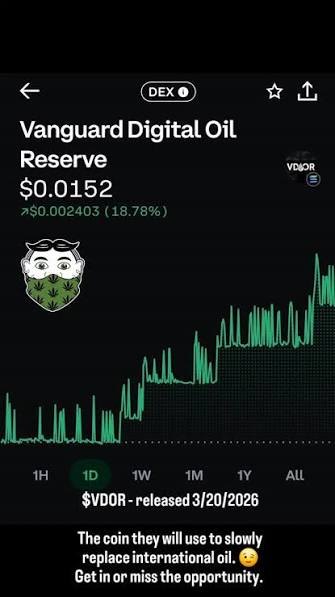
Type vdor crypto into a search engine or a token tracker and you will quickly notice a problem: there is no single, obvious answer. Instead of one well-known project, you find several different tokens that share the ticker VDOR, on different blockchains, with different names, different contract addresses and very different levels of trading activity. That is the first lesson of vdor crypto research. A ticker is a label, not an identity.
This guide explains how to research vdor crypto safely. It covers what the term can mean, how to confirm you are looking at the right token, how to read liquidity, volume and market cap on small tokens, which contract-level risks to check, how decentralized exchange trading works for micro-cap assets, and how to size a position so that a total loss would not hurt you. It also covers the other common meaning of vdor crypto, a misspelling of “vendor,” for businesses that want to accept or pay in cryptocurrency.
This article is educational and is not financial advice. Micro-cap tokens are among the riskiest assets in crypto, and you can lose your entire investment. For more explainers on technology and digital trends, visit AI Power Digest.
What Does “VDOR Crypto” Mean?
The phrase vdor crypto is used in three main ways.
As a ticker search. Most people who search vdor crypto are looking for a token that trades under the symbol VDOR. At the time of writing, public token trackers list more than one token with this symbol, on networks such as Base and Solana, sometimes with similar names. Because anyone can deploy a token and choose any name and ticker, identical or near-identical symbols are common in crypto.
As a misspelling of “vendor.” “Vdor” is also a frequent typo for “vendor.” Someone searching vdor crypto may really want to know how vendors accept crypto payments, which we cover later in this guide.
As a theme or brand. Small tokens often build their marketing around a story, such as a commodity, a reserve or a “store of value.” Whenever a vdor crypto project claims to be backed by something real, treat that as a claim that needs proof, not as a fact.
The safest approach is to treat vdor crypto as a research topic, not a product recommendation. Before you buy anything, you must be able to answer one question: exactly which token, on which network, at which contract address, am I looking at?
Why a Ticker Is Not an Identity in VDOR Crypto
Stock tickers are managed by exchanges, so each one points to a single company. Crypto works differently. There is no central registry, and no authority stops a new token from using a ticker that already exists. Think of it like car license plates that anyone can print: the letters on the plate tell you nothing about who owns the car.
In vdor crypto, this creates three practical dangers.
You can buy the wrong token. If you search a decentralized exchange for “VDOR,” you may see several results. Only the contract address tells them apart, and two tokens can have the same name, the same logo and the same ticker while being completely unrelated.
Copycats borrow credibility. Scammers deliberately deploy tokens with the same name and symbol as a legitimate project, then promote their version through ads and messages. In vdor crypto research, an unfamiliar link or a search result is never proof that a contract is the official one.
Prices can mislead. A price shown for one VDOR token has nothing to do with another. If a chart looks exciting, confirm that its contract address matches the token you intend to research.
The rule to remember is simple: the contract address is the identity, and everything else is decoration. In vdor crypto, that rule protects you from most avoidable mistakes.
How to Research VDOR Crypto Step by Step
Follow this routine every time, whether you are looking at vdor crypto or any other small token.
Step 1: Find the project’s own channels
Look for an official website, documentation and social accounts. Check how old the accounts are, whether they have real activity, and whether the team is named. Be cautious if the only information about the token comes from anonymous accounts, promotional posts or trading bots.
Step 2: Confirm the contract address from independent sources
Copy the contract address from the project’s own website, then compare it with at least two independent sources, such as a token tracker and a block explorer. Every source should show the same address. If they differ, stop.
Step 3: Open the block explorer
Every blockchain has explorers that show real on-chain data. For tokens on Base, use Basescan. For tokens on Solana, use Solscan. Paste the contract address and check when it was created, how many holders it has, how many transactions occur, and whether the contract source code is verified and readable.
Step 4: Examine the holders
Look at the top holder list. If a handful of wallets hold most of the supply, they can move the price at will. Note that liquidity pool contracts and burn addresses can appear near the top of the list, so check what each large address actually is.
Step 5: Check the trading pools
Find out where the token trades and how much liquidity each pool holds. A token with no pool, or with a pool holding almost nothing, may be impossible to sell at a fair price, or at all.
Step 6: Look at tracker listings, but do not over-trust them
Data sites such as CoinGecko and CoinMarketCap help you compare price and volume, but a listing is not an endorsement. Many tokens appear on decentralized exchange trackers automatically, without any review of the project.
Step 7: Search for negative information
Search the token name and contract address with words like “scam,” “honeypot,” “rug pull” and “can’t sell.” Read discussions from independent sources, not just the project’s own community.
Step 8: Write down your findings
Record what you verified and what you could not verify. If several critical items remain unknown, that is your answer about vdor crypto for now.
Reading Liquidity, Volume and Market Cap for VDOR Crypto
Numbers on token pages can be misleading, especially for small tokens, so reading vdor crypto data carefully matters. Here is how to read them properly.
Price is only the last trade
The displayed price of a small token is simply the price of the most recent trade. If a token had one transaction in the last day and zero volume, the price you see may be stale or set by a trivial trade. A quoted price does not mean you could sell a meaningful amount at that price. This matters a great deal for vdor crypto tokens with almost no activity.
Market cap versus fully diluted valuation
Market capitalization multiplies the price by the circulating supply. Fully diluted valuation (FDV) multiplies the price by the maximum supply. For vdor crypto tokens with unclear supply data, both numbers can be blank, wrong or theoretical. As an example, a token priced at $0.05 with a total supply of 1 billion has an FDV of $50 million on paper, yet if only a few hundred dollars of liquidity exists, nobody could ever realize that value.
Liquidity is what makes selling possible
Liquidity is the amount of money sitting in the trading pools. It determines how much a trade moves the price. On most decentralized exchanges, pools use a constant-product formula, and you can see the effect with a simple example. Suppose a pool holds $50,000 of USDC on one side and $50,000 worth of tokens on the other. If you buy with $5,000, which is 10% of one side, you receive tokens worth about $4,545 at the starting price. Your average price is about 10% higher than the price before you traded, and the pool’s price ends about 21% higher.
Now flip it around. If you later want to sell, your own sale pushes the price down by a similar amount, and if other holders sell first, the price falls further. In vdor crypto pools with very little liquidity, even a modest trade can cause huge slippage.
Volume and transaction counts
Look at 24-hour volume and the number of transactions over several days. Near-zero volume means there is no real market. A vdor crypto token that trades a handful of times a day can show dramatic percentage moves that mean nothing.
Beware of wash trading
Some projects create artificial volume by trading with themselves to appear active. Check whether trades come from many unrelated wallets or from a small circle repeating the same pattern.
Tokenomics Checks: Supply, Distribution and Unlocks
Tokenomics describes how a token is created, distributed and controlled. For vdor crypto, these are the questions to answer.
- What is the total supply, and can more be created? If the contract has a mint function controlled by the owner, new tokens can be created at any time, diluting holders.
- How is the supply distributed? Look for large allocations held by the team, insiders or a few wallets. Ask whether those tokens are locked or vested.
- Is the liquidity locked? When liquidity provider tokens are locked or burned, the creator cannot simply withdraw the pool. If they are not, the pool can be removed at any time.
- Who controls the contract? Some contracts let the owner change fees, pause trading or blacklist wallets. “Renounced ownership” can reduce this risk, but it is not a guarantee, because other control mechanisms can exist.
- Are there fees on transfers or sales? A high sell tax can make it very costly, or impossible, to exit.
When these details are missing or hidden in a vdor crypto project, assume the worst until proven otherwise.
Smart Contract Risks Behind VDOR Crypto
Even if a vdor crypto project looks harmless, the contract itself may carry risks. These are the most common ones.
Honeypots. A honeypot contract lets you buy but blocks or heavily taxes selling. The price chart looks healthy because only buys succeed.
Hidden mint or owner functions. The owner may be able to mint unlimited tokens, change balances or freeze accounts.
Upgradeable proxies. A contract that can be upgraded by its owner can be changed after you buy, including in harmful ways.
Blacklists and trading pauses. Some contracts can stop specific wallets, or everyone, from trading.
Rug pulls. Creators remove liquidity or dump their holdings, leaving buyers with worthless tokens.
How can you check these risks? Read the verified source code on the block explorer if you can, or ask someone with contract experience. Use simulation features in wallets or security tools to test whether a small sell would succeed. Audits can help, but an audit is a snapshot, not a guarantee, and some reports are fake. Always verify an audit on the auditor’s own website.
Trading VDOR Crypto on a Decentralized Exchange
Small tokens like most vdor crypto listings usually trade on decentralized exchanges (DEXs), where you swap directly from your own wallet. Here is what to know.
Use the right network. Tokens on Base require a wallet connected to Base, and tokens on Solana require a Solana wallet. Sending funds to the wrong network can lose them permanently.
Start with a tiny test. Buy a very small amount, then try to sell a small amount. If the sale fails or costs far more than expected, you have learned something cheaply.
Set slippage carefully. Slippage tolerance is the maximum price movement you accept. Setting it very high can let bots trade against you at bad prices. Setting it very low can make trades fail.
Understand MEV and sandwich attacks. On small pools, bots can place orders before and after yours to profit from the price impact. Smaller trades and lower slippage help reduce the damage.
Manage token approvals. When you swap, you often grant a contract permission to spend your tokens. Approve only what you need, and revoke old permissions with a tool such as Revoke.cash.
Use a separate wallet. Keep experiments in a dedicated wallet that holds only what you can afford to lose, and keep your main holdings elsewhere. This is especially wise for vdor crypto experiments.
Ignore unsolicited messages. No legitimate project will DM you a link to “claim” or “verify” tokens. Treat every such message as a scam attempt.
Asset-Backed Claims: What to Demand From Any “Reserve” Token
Many small tokens, including some in the vdor crypto space, use names that suggest backing by a commodity, a reserve or an established financial institution. A name is free to choose, so it proves nothing. If a token claims to be backed by oil, gold or any real-world asset, ask for the following.
- A named custodian that holds the asset, with verifiable contact details.
- Independent proof of reserves from a reputable third party, updated regularly and matched to the token supply.
- A legal entity responsible for the token, with a real registration you can check.
- A clear redemption mechanism that explains how and when a holder can exchange tokens for the underlying asset.
- Regulatory clarity, meaning a statement of which rules the issuer follows and where.
If a vdor crypto project cannot provide these, the “backing” is a marketing story. Also be wary of names that echo well-known financial brands, because borrowed credibility is a common trick. The U.S. Securities and Exchange Commission and Investor.gov publish investor alerts about crypto-asset offerings that are worth reading before you trust any such claim.
Common Scams Around VDOR Crypto
Micro-cap tokens attract predictable scams, and vdor crypto is no exception. Knowing the pattern helps you avoid it.
Rug pulls and slow rugs. The creator promotes the token, collects buyer funds, then removes liquidity or sells out gradually.
Fake airdrops. You are told you have been “allocated” free tokens and must connect your wallet or approve a transaction. The approval drains your wallet.
Impersonation. Fake accounts copy a real project’s name, logo and posts, and offer “support” that steals your seed phrase.
Pump-and-dump groups. Organizers buy first, hype the token, and sell to the people who join late.
Cloned tokens. A near-identical token is launched with the same name to catch people who buy the wrong contract.
Fake dashboards and staking sites. These show growing balances that cannot be withdrawn.
The Federal Trade Commission explains how crypto scams work and how to report them. If something seems too good to be true, or if you feel pressured to act quickly, take that as a reason to stop.
Position Sizing and Risk Management for VDOR Crypto
Even after careful research, a micro-cap token remains a very high-risk bet. The right mindset is to treat any vdor crypto position as a speculative ticket you can afford to see expire worthless.
Decide the maximum loss first. Choose an amount you could lose completely without changing your life, and never exceed it. Do not use borrowed money, rent money or emergency savings.
Size positions for liquidity, not for hope. A position that is large relative to the pool cannot be sold without crushing the price. A useful rule is that if your intended trade would move the price noticeably, the position is too large for the market.
Have an exit plan before you buy. Decide in advance what would make you sell, whether that is a target, a time limit or a change in the facts. Write it down.
Take profits deliberately. If a small position multiplies, consider withdrawing your original stake so that the rest is house money. It is easy to watch paper gains vanish while waiting for more.
Avoid concentration. Spread risk across time and across asset types. Small tokens such as vdor crypto should be a tiny slice of a broader plan, not the plan itself.
Do not chase losses. Buying more of a falling token to “average down” often multiplies the loss when the problem is structural, such as a broken contract or a vanished team.
Tax, Legal and Regulatory Notes for VDOR Crypto
Rules differ by country and change often, so treat this as a prompt to check your local requirements, not as tax or legal advice.
In many places, selling crypto, swapping one token for another, or spending crypto can be a taxable event. That includes swapping a stablecoin for a small token on a DEX. Keep records of dates, amounts, prices and fees for every transaction. Good records make vdor crypto tax reporting far easier. Block explorers and wallet histories help, but a spreadsheet or tax tool can save trouble later.
Regulation of tokens, especially those marketed as investments or backed by assets, is evolving. Tokens that promise returns or profit from the efforts of others can attract securities scrutiny in some jurisdictions. If a project claims to operate “outside regulation” as a selling point, remember that this also means you have little recourse if something goes wrong.
Vendor Crypto Payments: The Other Meaning of VDOR Crypto
If you searched vdor crypto because you meant “vendor,” this section is for you. Businesses that sell goods or services increasingly get asked whether they accept cryptocurrency, and vendors who buy from suppliers sometimes want to pay in crypto too.
Choose stable assets for invoices. Pricing invoices in Bitcoin or another volatile asset means the value can change between invoice and payment. Many vendors prefer stablecoins or ask a payment processor to convert crypto to local currency immediately. That keeps vdor crypto payments predictable for both sides.
Use a reputable processor or a clear wallet process. A processor can handle conversion, receipts and reporting. If you accept payments directly, use a dedicated wallet, keep backups, and record each payment against an invoice.
Verify wallet addresses carefully. Payments are irreversible, so a single wrong character can send funds to the wrong person. Confirm addresses through a second channel, and beware of “address poisoning,” where scammers send tiny transactions so their lookalike address appears in your history.
Plan for refunds and disputes. Unlike card payments, crypto has no built-in chargeback system. Set a refund policy in advance and state it clearly in your terms.
Handle accounting and tax properly. Payments received in crypto are usually income measured at the value on the day you receive them, and conversions can create further tax events. A local accountant familiar with digital assets can help.
Write agreements. For larger deals, put the payment currency, network, timing and fees in a contract